


Deep within the emerald heart of the Congo Basin, the rainforest whispers stories of its oldest guardians. The Ba’aka people, nomadic hunter-gatherers of the Dzanga-Sangha, have lived in harmony with this ecosystem for generations. To understand the Ba’aka Pygmy culture, one must look beyond the labels and see a community perfectly synchronized with the pulse of the jungle.
While often grouped under the broad term “Pygmy,” these indigenous people possess distinct identities. The Ba’aka primarily inhabit the southwestern Central African Republic and northern Republic of Congo. They differ from their neighbors, the Baka, who live across southeastern Cameroon and Gabon. Understanding these nuances is essential for any traveler seeking a respectful immersion into the Ba’aka Pygmy culture.
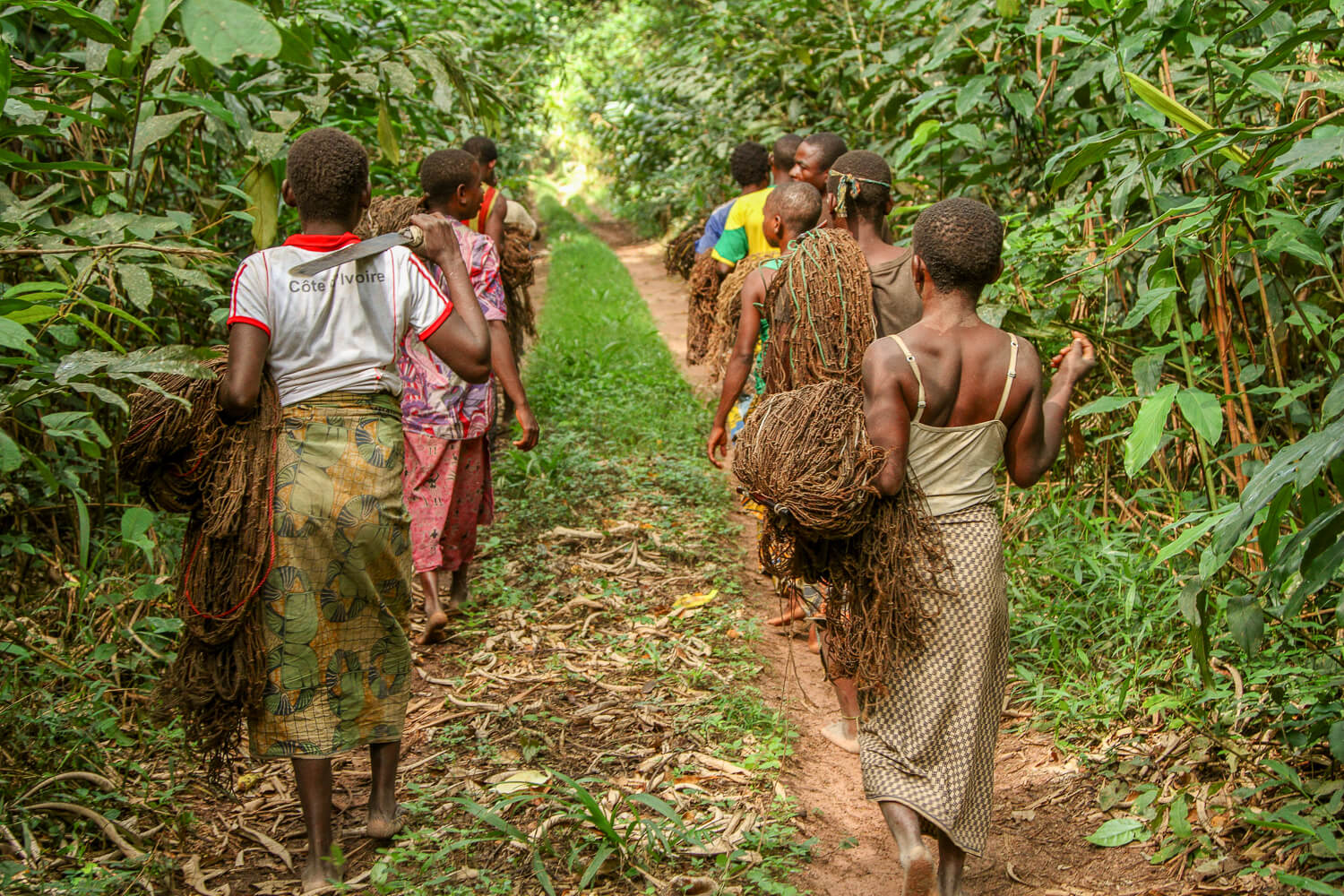
Ba’aka men rank among the most dedicated fathers in the world. They actively help rear their young, sharing childcare responsibilities equally with women. This partnership extends to every facet of life; couples hunt together, prepare food as a team, and enjoy social activities as equals. This egalitarian structure maintains a powerful bond between families, ensuring the community remains resilient.
History has forced these communities to adapt. During the colonial era, many tribes fled into the jungle to escape forced labor, which increased the pressure on local wildlife. Consequently, the Ba’aka transitioned from traditional spear hunting to net hunting. Today, they use hand-woven nets to catch small game, a method that proves far more efficient in the dense undergrowth along the Sangha and Oubangui rivers.
The Ba’aka live in small forest villages, constructing “mongulu” huts from bowed branches and broad leaves. However, modern pressures threaten this way of life. Illegal logging and poaching force families deeper into the forest to find food. Furthermore, social marginalization often leads to economic exploitation. Protecting the Ba’aka Pygmy culture requires a commitment to sustainable tourism that empowers the community rather than exploiting it.
The Ba’aka possess an unparalleled knowledge of the forest. By participating in conservation efforts with organizations like the WWF, they play a fundamental role in protecting the Dzanga-Ndoki National Park. Many Ba’aka now serve as expert rangers and guides, using their tracking skills to safeguard biodiversity.
Tourism serves as a vital economic engine for this region. At Kwafrika Travel, we support a revenue model that prioritizes the local population. 20% of our overall profit is invested in communities surrounding protected areas. So far we have impacted more than 10 000 people living in and around protected areas in Central Africa through our Programme Utalii Kwetu.
Most Ba’aka reside within the Dzanga-Sangha Forest Special Reserve. For those staying at Sangha Lodge, the experience is raw and immersive. This is not a staged show for tourists. Instead, you accompany the Ba’aka as they go about their daily lives—hunting, foraging, and surviving.
During your time with them, you will learn the secrets of the jungle:
While the Ba’aka are central to the Sangha region, the Baka people of Cameroon and Gabon share a similar, deeply spiritual heritage.
The Baka view the forest as a sentient being. They worship Jengi (or Ejengi), a forest spirit who mediates between the community and the supreme being, Komba. Their identity is expressed through extraordinary musical traditions, such as:
The Baka increasingly face restrictions on their traditional lands, particularly in areas like the Dja Faunal Reserve. As logging and strict conservation zones expand, the Baka struggle to maintain their hunter-gatherer lifestyle. By choosing responsible travel, you help highlight the importance of land rights and cultural preservation for all indigenous groups across Central Africa.