


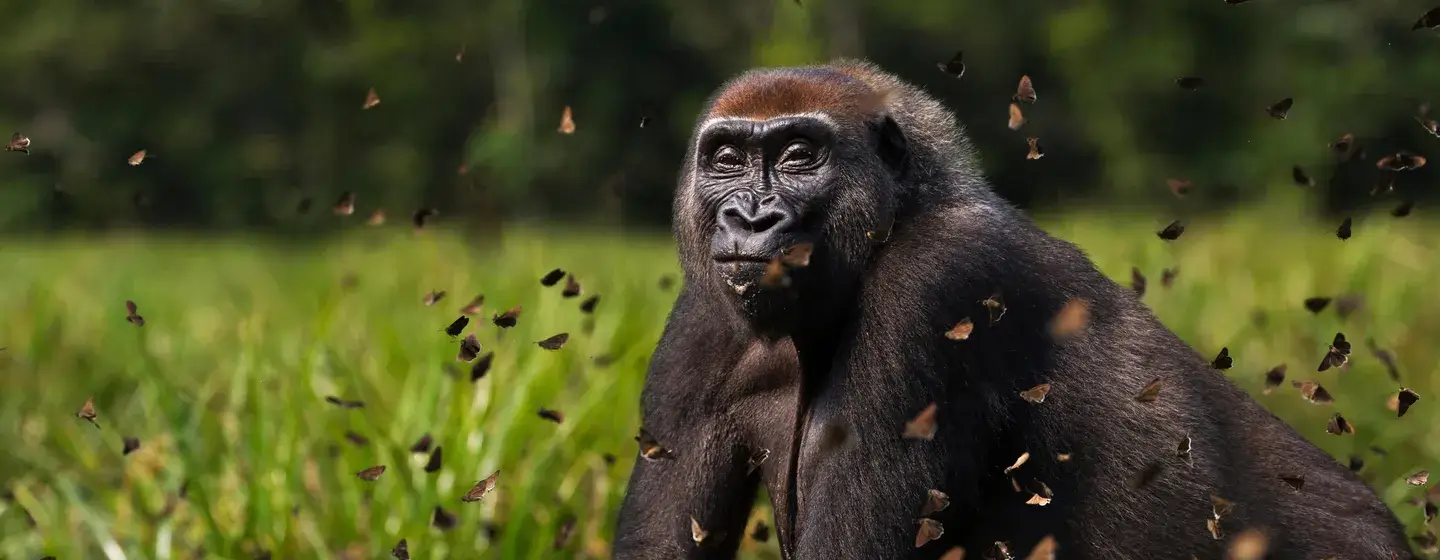
Western Lowland Gorilla Trekking offers one of the most powerful wildlife experiences in Africa. It takes travelers deep into the Congo Basin, where dense rainforests shelter one of the planet’s most iconic primates: the western lowland gorilla. For Kwafrika Travel, this is more than a safari product. It is a journey into conservation, culture, and adventure in some of Central Africa’s most remote landscapes.
The western lowland gorilla is the most widespread gorilla subspecies, yet it remains critically endangered. Because these animals live in thick, hard-to-reach forests, researchers still do not know the full size of the population. Even so, one thing is clear: their numbers have fallen sharply, and every responsible safari matters.
Western lowland gorillas live in parts of Cameroon, the Central African Republic, Equatorial Guinea, Gabon, and the Republic of Congo, with possible remnant groups in the Democratic Republic of the Congo. Some of the strongest populations survive in the remote swamp forests of the Republic of Congo.
You can identify them by their slightly smaller build, brown-grey coats, and auburn chest hair. They also have wider skulls, more prominent brow ridges, and smaller ears than other gorilla subspecies.
Western lowland gorillas have declined by more than 60% over the last 20 to 25 years. Poaching, disease, and habitat loss continue to pressure their survival. Even if humans removed every major threat today, scientists estimate that the population would still need around 75 years to recover.
That reality makes conservation-based tourism especially important. Carefully managed visits can help fund protection, support local communities, and create a stronger case for preserving gorilla habitat.
Thanks to strong field logistics and regional experience, Kwafrika Travel has helped many travelers track western lowland gorillas across Central Africa.
For many years, this park focused mainly on scientific research. More recently, it has started receiving visitors. Travelers who booked trips here with Kwafrika Travel were among the first to witness these endangered primates in this remarkable forest setting.
A journey usually begins in Brazzaville and lasts about 6 to 8 days, depending on the itinerary and access route.
For luxury travelers, Odzala-Kokoua offers one of the most refined gorilla experiences in Central Africa. Kwafrika Travel often recommends the Ngaga Camp area, which suits visitors who want a well-organized gorilla trekking experience with fly-in or road access.
Located north of Brazzaville, Lesio-Louna offers one of the most accessible and reliable gorilla viewing experiences in the region. Unlike a standard national park, it focuses on orphaned and rescued gorillas that live in semi-wild conditions on forested islands. This makes it a unique option for travelers who want a close and controlled conservation experience.
Dzanga-Sangha offers Western Lowland Gorilla Trekking in one of the most pristine ecosystems in Africa. The reserve also stands out for the famous Dzanga Bai, where hundreds of forest elephants gather and create one of the continent’s most extraordinary wildlife scenes.
Loango is one of Gabon’s best-known wildlife destinations. It also offers a distinctive gorilla experience near the coast. Specialized lodges such as Loango Lodge and Louri Wilderness Camp support the experience, but travelers should know that sightings are less predictable than in East Africa.
This park remains one of the most important scientific sites for gorilla habituation. It shows strong conservation potential, but tourism here still remains limited.
Ivindo combines dense rainforest, waterfalls, and rich biodiversity. Tourism is growing, but gorilla viewing is not yet structured for regular visitor access.
In Cameroon, travelers can sometimes see western lowland gorillas in the wild in Lobéké National Park. However, sightings remain rare, and tourism infrastructure is still limited.
Lobéké belongs to the Sangha Trinational landscape, a major conservation area shared by Cameroon, the Central African Republic, and the Republic of Congo. Even so, Kwafrika Travel generally recommends Congo or the Central African Republic for a stronger gorilla-focused experience.
Kwafrika Travel believes tourism should do more than move people from one destination to another. It should also support people, wildlife, and conservation.
Kwafrika Travel and its partners supported the creation of the Congo Basin Leaders’ Initiative, a network that helps strengthen conservation across protected areas in the Congo Basin. The network connects the private sector, researchers, and conservation actors so they can support critically endangered species such as western lowland gorillas.
Kwafrika Travel has helped promote ecotourism in:
This matters because tourism creates jobs in remote regions where opportunities remain limited. It also gives communities a reason to protect forests instead of clearing or exploiting them.
Tourism revenue helps fund park management, conservation programs, and local livelihoods. In Dzanga-Sangha, for example, conservation tourism supports more than 260 jobs, many of them filled by local community members, including Indigenous BaAka people.
Central Africa is home not only to gorillas, but also to Ebola. The virus has caused major die-offs among gorillas and chimpanzees in remote forest areas across their range. Some scientists estimate that Ebola killed about one-third of the wild gorilla population in the early 2000s. In some places, the damage was even worse. In the Minkébé Forest in northeastern Gabon, the virus may have killed more than 90% of gorillas and chimpanzees.
Only about 22% of western lowland gorillas live inside protected areas. That means most groups remain exposed to logging, road building, settlement expansion, and hunting.
As companies open remote forests, they often create access routes that make it easier for commercial hunters to enter gorilla habitat. Logging trucks can also transport bushmeat to distant markets, which further increases pressure on wildlife.
Although hunting gorillas is illegal, poaching still continues. Some hunters kill gorillas for bushmeat, while others target infants for the illegal pet trade. This activity not only threatens gorillas, but also puts human health at risk, since Ebola and other diseases can spread through the butchering and handling of primate meat.
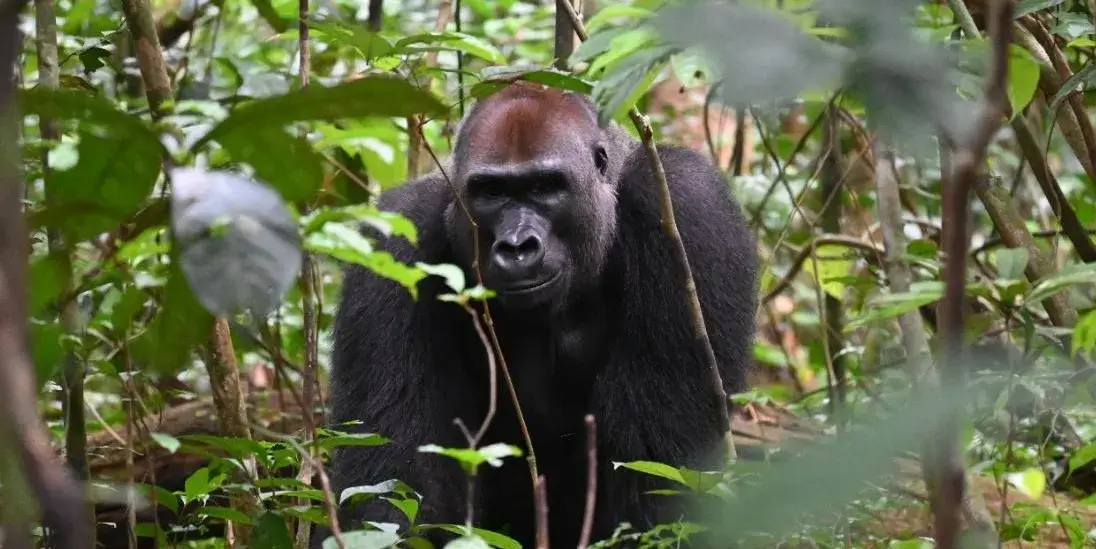
Gorilla habituation is the process of helping a gorilla group grow comfortable around human observers. It does not mean forcing close contact. Instead, conservation teams slowly teach the gorillas that human presence does not represent a threat.
This process can take years. Researchers identify a group, observe it carefully, and then build trust over time. When the group finally becomes visitable, guides can lead controlled encounters that support both conservation and tourism.
Habituation matters because gorillas and humans share close genetic similarities, which makes gorillas especially vulnerable to human diseases. For that reason, ethical visits require safe distance rules, handwashing, boot cleaning, and often mask use.
Habituation also depends on the group itself. When a silverback dies, the group may split apart, and females may leave or join other groups. When that happens, conservation teams often need to start the process again.
Western Lowland Gorilla Trekking gives travelers a rare chance to see one of Africa’s most endangered primates in its natural home while also supporting conservation on the ground. When done responsibly, it helps fund park protection, create local jobs, and strengthen the future of Central Africa’s rainforests.
For Kwafrika Travel, this kind of safari reflects a bigger mission: travel should protect what makes the destination special.
Western lowland gorillas remain under pressure, but they still survive in some of Africa’s most beautiful forests. With the right planning, the right destinations, and the right conservation partners, travelers can experience these great apes in a way that supports their long-term survival.
Western Lowland Gorilla Trekking is therefore not just a safari. It is a conservation journey, a rare wildlife encounter, and a powerful reason to explore Central Africa with care.