


The Tata Gonda religious movement, also known as the Celestial Army, is a unique religious community founded by the Congolese prophet Tata Gonda Wasilua. Emerging in 1989 in the Democratic Republic of Congo (DRC), it blends African traditional beliefs with Christianity.
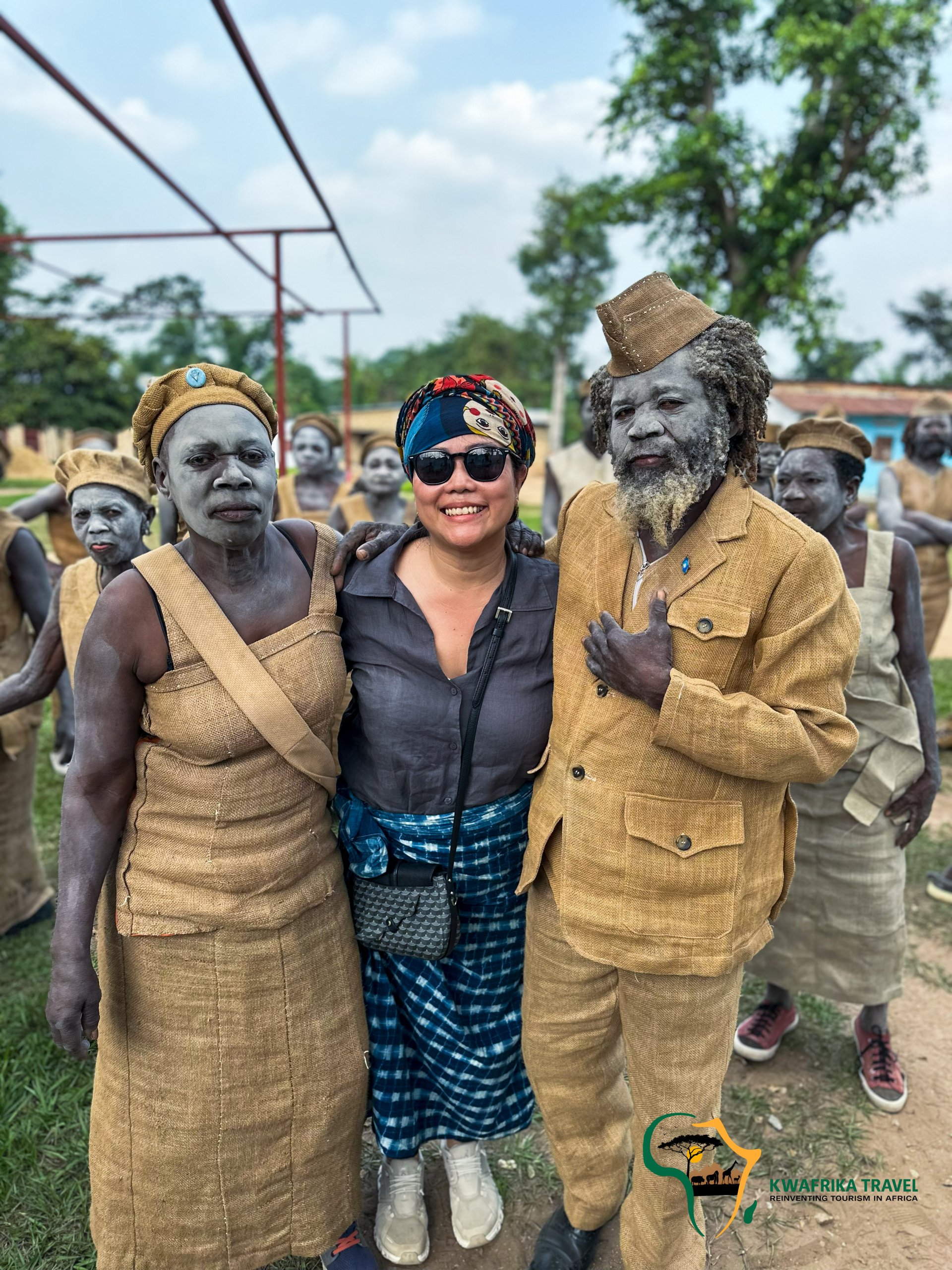
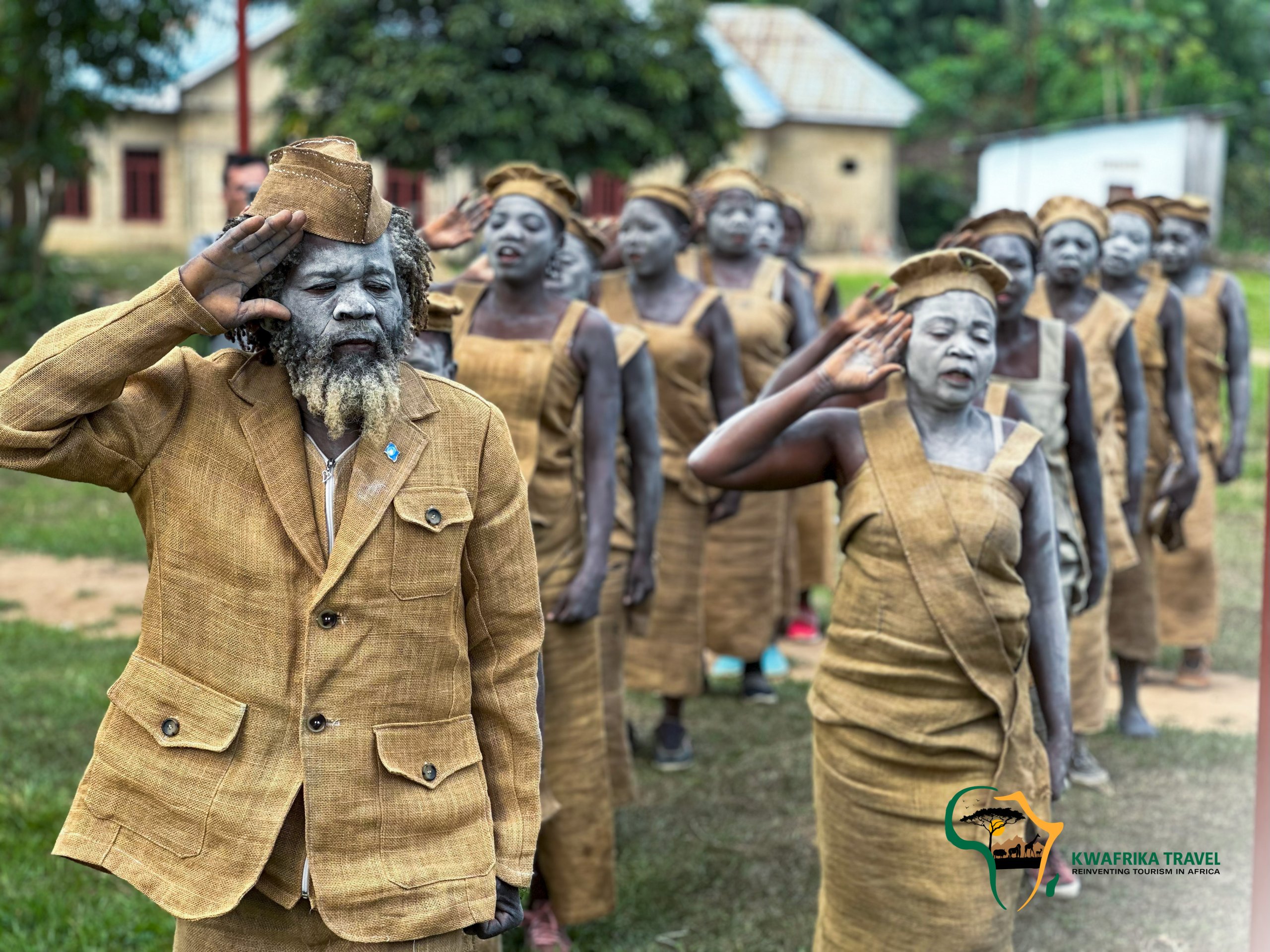
At the center of Tata Gonda in Congo, the prophet claimed a divine call to humility and penitence. He adopted sackcloth, a rough material used for packaging, as a symbol of submission before God. Consequently, followers embraced this austere lifestyle, shaping a distinct spiritual identity. Watch a Instagram short of a recent Kwafrika Travel experience with Tata Gonda religious movement.
BELIEFS AND PRACTICES
Followers of Tata Gonda, mainly in the DRC and Angola, live a strict, monastic lifestyle. They actively reject what they view as a corrupt and sinful world. As a result, their daily practices emphasize purification, humility, and discipline:
COMMUNITY STRUCTURE AND LEADERSHIP
After the founder’s death, leadership transitioned while preserving the original doctrine. Today, the community remains deeply rooted in Tata Gonda in Congo, especially in Mbanza Nzambi, located about three hours south of Kinshasa.
Leadership follows an autocratic model. A spiritual authority guides decisions and ensures strict adherence to the founder’s teachings. This structure reinforces unity and continuity across generations.
SOCIAL INTERACTION AND OUTREACH
Although the community lives in relative isolation, visitors often report a surprisingly warm reception. Guests are welcomed, invited to share meals, and encouraged to engage in long conversations.
This openness provides rare, firsthand insight into Tata Gonda in Congo. Moreover, it allows travelers and researchers to understand the group beyond stereotypes, often revealing a disciplined yet hospitable society.
PRESENCE BEYOND DRC AND ANGOLA
The Tata Gonda movement operates primarily within the DRC and Angola. At present, there is no substantial evidence confirming its presence in the Republic of Congo (Congo-Brazzaville).
Historically, the Congo region split into two modern states: the Democratic Republic of the Congo (formerly Zaire) and the Republic of the Congo. Despite shared heritage, the movement remains geographically concentrated in its original zones.
FINAL THOUGHTS
The Celestial Army of Tata Gonda represents a compelling blend of spirituality and communal living. Its emphasis on humility, symbolic practices, and rejection of materialism reflects a radical interpretation of faith.
Ultimately, the movement stands as one of Central Africa’s most distinctive religious expressions, rooted in discipline, identity, and a deeply lived belief system.
Frequently Asked Questions
1. Who founded the Tata Gonda movement?
The Tata Gonda movement was founded by Congolese prophet Tata Gonda Wasilua in 1989. He introduced a doctrine centered on humility, penitence, and spiritual discipline, inspiring followers to adopt a minimalist lifestyle rooted in strong religious devotion and communal living practices.
2. Why do followers wear sackcloth?
Followers wear sackcloth to symbolize humility and submission before God. This practice reflects the founder’s teachings and represents rejection of materialism. The clothing serves as a constant reminder of spiritual discipline, reinforcing their commitment to a simple and penitential way of life.
3. Where is the community mainly located?
The community is primarily located in the Democratic Republic of Congo and Angola. Its main settlement is in Mbanza Nzambi, south of Kinshasa. This location remains central to the movement’s identity, serving as both a spiritual and organizational hub.
4. Can visitors interact with the community?
Yes, visitors can interact with the community, which is known for its hospitality. Guests are often welcomed, offered meals, and invited into discussions. These exchanges provide valuable cultural insight and allow outsiders to better understand the group’s unique religious practices.
5. What makes the Tata Gonda movement unique?
The movement stands out due to its strict lifestyle, symbolic use of sackcloth, and communal isolation. It blends Christian and traditional African beliefs while emphasizing humility and discipline. This combination creates a rare, deeply structured spiritual community within Central Africa’s diverse religious landscape.
This webpage is based on Kwafrika Travel’s active 2026 operations in Western Congo and Mangrove marine national park. The company does send multiple groups of visitors to the park annually/