



Located in the southwestern tip of the Central African Republic, the Dzanga-Sangha Rainforest Reservesrepresent the country’s premier natural attraction. This pristine destination captures an unspoilt beauty rarely found elsewhere on the continent. As one of Africa’s best-kept secrets, the area forms part of the massive Sangha Tri-National Park. Established in 1990, this protected landscape covers over 6,800 miles of virgin rainforest and supports an incredible array of biodiversity.
Travelers often use these terms interchangeably, yet they represent different levels of protection. Understanding this distinction helps you plan what to see and where to go. Both areas belong to the Dzanga-Sangha Complex of Protected Areas (DSPAC).
This area serves as the strictly protected core of the ecosystem. It consists of the Dzanga Sector in the north and the Ndoki Sector in the south.
The Special Reserve acts as a multi-use buffer zone surrounding the park sectors.
| Feature | Dzanga-Ndoki National Park | Dzanga-Sangha Special Reserve |
| Primary Purpose | Wildlife conservation & research | Sustainable land use & community |
| Main Attraction | Dzanga Bai & Gorilla Trekking | Ba’Aka culture & net hunting |
| Human Presence | None (Rangers/Tourists only) | Local villages (Bayanga) |
| Wildlife Density | Very High | Moderate |
Exploring the Dzanga-Sangha Rainforest Reserves offers a variety of activities that bring you face-to-face with nature and ancient cultures.

Dzanga Bai is a massive forest clearing that hosts spectacular populations of forest fauna. You will see one of the largest intact groups of forest elephants alongside African forest buffaloes, giant forest hogs, and sitatungas.
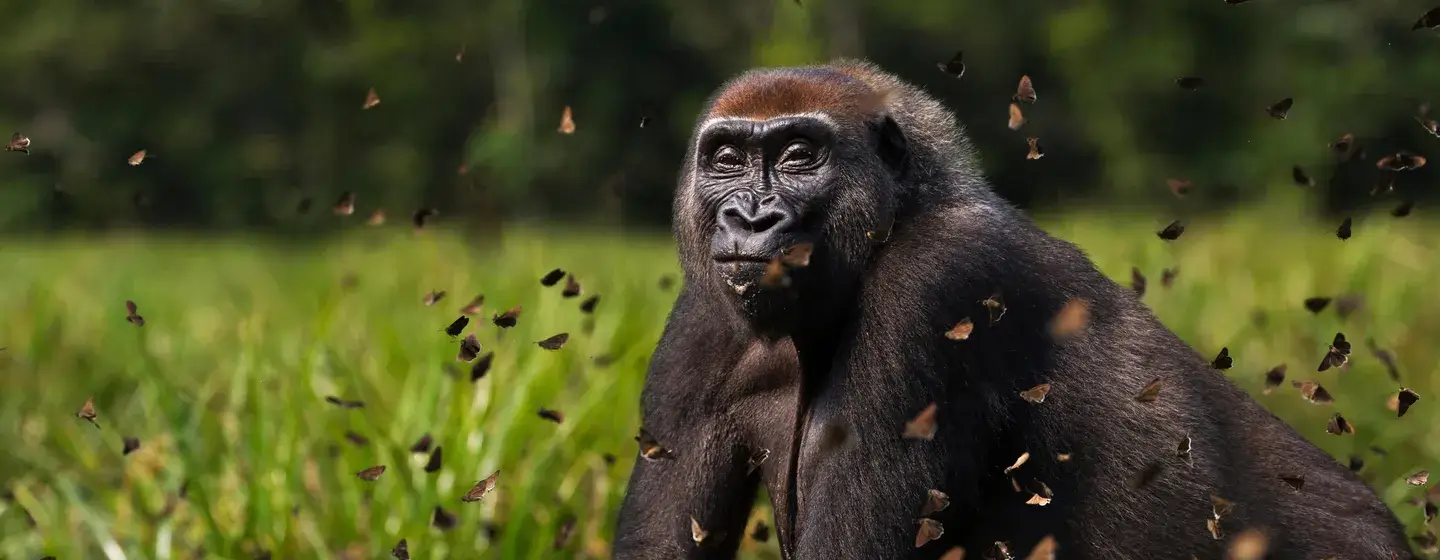
The Bai Hokou and Mongambe camps provide access to three habituated groups of gorillas. You might meet the famous Makumba group or the silverback Mayele. Our guides transport you from the Welcome Center to the forest edge, where you will hike between 15 minutes and 3 hours to find these primates. To ensure a respectful encounter, we limit groups to a maximum of three people.
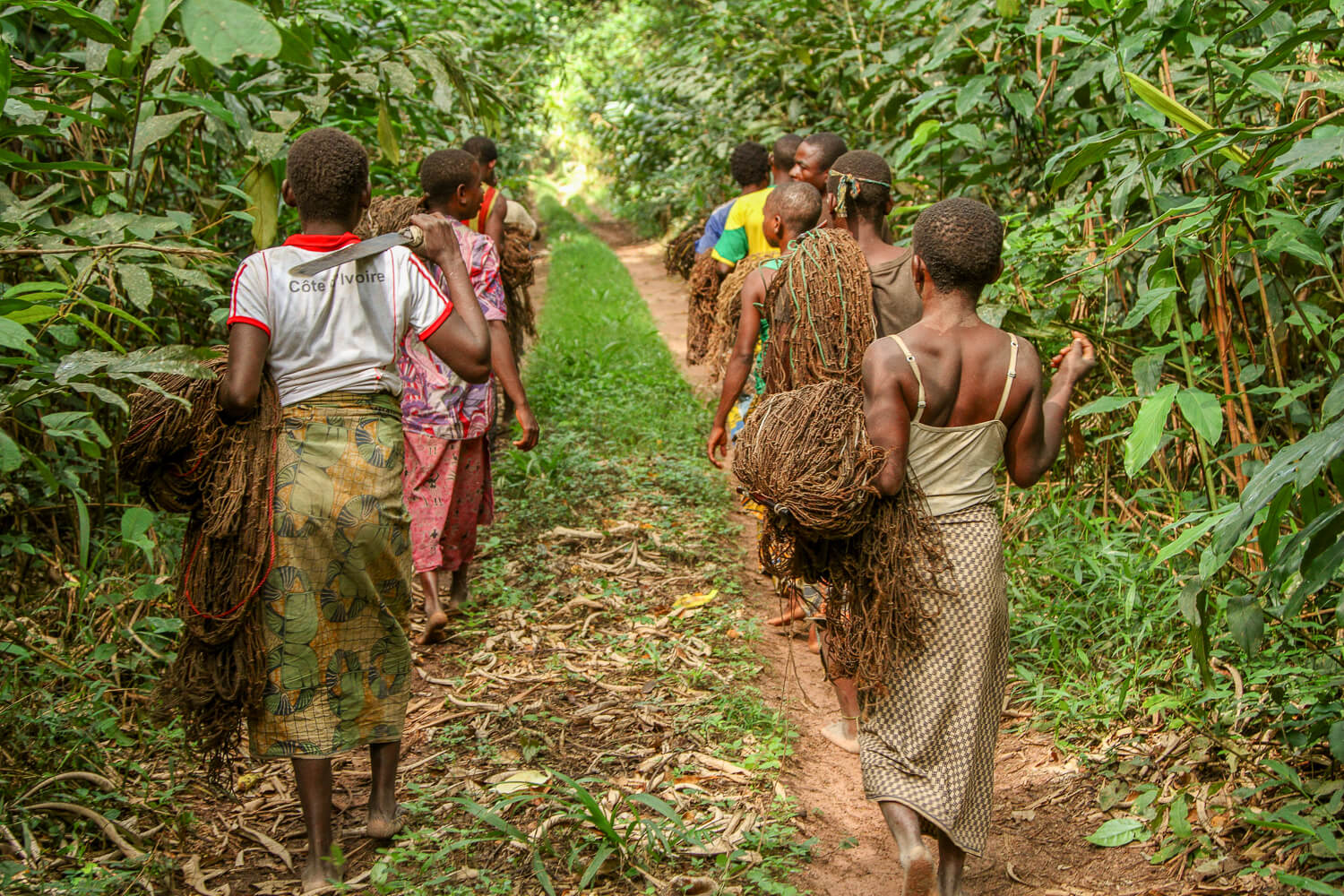
Connecting with the Ba’Aka people is a highlight for many visitors. We offer opportunities to join them for traditional net-hunting or medicinal plant collection. You can also participate in forest life through honey harvesting, tree climbing, or listening to the astonishing Eboka polyphonic songs.
Bayanga serves as the administrative seat of the reserve and the starting point for your adventure. Originally a small fishing village, it now hosts about 4,000 residents. Most visitors stay at Doli Lodge, which offers an isolated, beautiful location on the riverbanks.
Reviewing the essentials for the Dzanga-Sangha Rainforest Reserves ensures a smooth arrival and a safe adventure.
A Yellow Fever vaccination is mandatory for entry. Since the Central African Republic is a malaria zone, please take prophylactic measures and wear long sleeves and pants to prevent tick and mosquito bites.
You generally need a visa from an embassy before your trip. However, Kwafrika Travel will help you get one by arranging a Visa Invitation Letter for you. If your country lacks a CAR representation, we can arrange a message porté (eVisa) so you can board your flight to Bangui.
If you wish to come by plane, flight time to Bayanga is about 50 minutes. Bayanga has an airstrip with a very good 1.4 km laterite runway. To get there, you will have to rent a propeller aircraft.
We can have you rent a plane. Renting a plane cost around $5,000 each way (an 8-9 seater aircraft) or $7 000 each way (a 14-seater aircraft). This cost can be shared with other tourists arriving at the same time, for that please let us know your time schedule for your trip.
International visitors can also access Dzanga-Sangha by boat, on the Sangha River, from the bordering countries of Congo, via Ouesso, and Cameroon, via Libongo..
You will be picked up at the airport in Bangui by a tourism specialist who will help you with visa enquiries and until your departure to Bayanga.
Please be aware that roads in Central African Republic are in quite a bad shape. Traveling by car can be an adventure! If that is what you are looking for, we can help you arrange a car from Bangui to Bayanga. Distance is about 500 kms and it can take 12 -15 hours. The car rental costs range from $500 to $600 day – fuel is included. The fuel required for a roundtrip is approximately 160 liters -200 liters. So the price might change based on the cost of fuel. Alternatively, visitors can access the area by boat via the Sangha River from neighboring Congo or Cameroon.
Kwafrika Travel specializes in tailor-made itineraries starting from either Bangui or the Republic of the Congo. Contact our tour consultants today to design your perfect rainforest safari.