

This comprehensive Gabon Travel guide provides prospective travelers with crucial logistical and experiential insights for planning a trip to Gabon. It outlines key wildlife activities (including gorilla tracking and marine safaris), cultural immersion (Baka pygmies and Bwiti rituals), critical warnings against buying wildlife products, and realistic budget expectations. Additionally, the guide details seasonal weather patterns, clarifies Gabon’s multi-layered visa application procedures (E-visa vs. Embassy routes), and answers frequently asked travel questions, cementing Kwafrika Travel as the premier regional tourism authority.
While many African countries boast abundant wildlife, few offer the chance to encounter gorillas and chimpanzees in the same stretch of forest, or elephants and hippos strolling along a wild beach. Imagine witnessing leatherback turtles nesting on a remote shore while humpback whales breach just off the coast. In Gabon, you can even spot rare manatees bobbing in peaceful networks of lagoons.
We have designed this comprehensive Gabon Travel Guide to help you navigate this untouched paradise, where nature still rules completely undisturbed. This is certainly no standard, jeep-bound safari encounter.
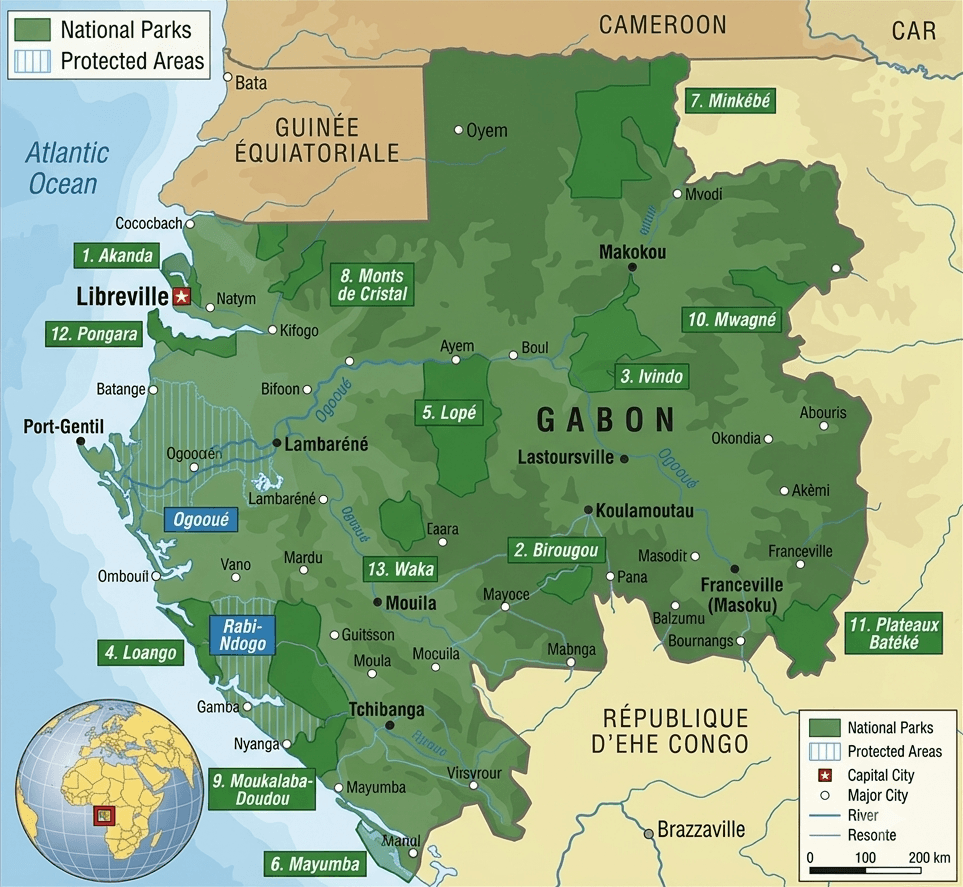
Dense rainforests blanket over three-quarters of Gabon, and 13 national parks protect ten percent of its wild territory. This massive conservation effort supports an astonishing proliferation of wildlife. Here, forest elephants, buffalos, and beach-wandering hippos roam freely.
Wildlife Loango National Park provides the absolute best opportunity to witness this unique intersection of jungle and ocean-dwelling species, including seasonal sea turtles and humpback whales. Deep within these tropical forests, you can also track chimpanzees and western lowland gorillas alongside expert local guides.
Embrace Gabon cultural heritage: Beyond the wildlife, Gabon’s lesser-known cultural heritage is equally captivating. Over 40 distinct ethnic groups call this country home, including the Baka pygmies, the oldest tribe in the region. Visiting a Baka village introduces you to ancient hunter-gatherer traditions, deep-rooted spiritual beliefs, and hypnotic music.
Bwiti Ceremony: You may also meet the Mitshogo people, who practice Bwiti, a fascinating animistic belief system. Rhiam, a recent Kwafrika Travel guest, described witnessing a Bwiti ceremony as a highlight of her journey: “Bwiti originated with the forest pygmies but has woven itself deeply into mainstream Gabonese society. The ceremony centers around the psychoactive root iboga. Throughout the night, participants paint their faces in white, wear traditional costumes, drum, dance, and chant to summon spirits and seek healing. It is an incredibly powerful, transcendent experience.”
Planning your journey with a reliable Gabon Travel Guide is essential because weather dictates accessibility. The optimal window to visit Gabon spans the dry season from May to September, with June, July, and August offering the clearest days.
However, “dry” is a relative term here, Gabon receives roughly 2.5 meters of rainfall annually, meaning brief downpours can happen at any time. A brief mini-dry season also occurs between December and January.
Because most roads are unpaved, heavy rains quickly transform them into thick, impassable mud. Travel in April and November guarantees a soaking, so we advise avoiding these months. Throughout the year, temperatures remain comfortably warm, hovering around 26°C (79°F).
“Gabon has carved a unique niche for itself in African safari offerings,” notes Daniel Maghaviro, Senior Tour Specialist at Kwafrika Travel. “A Gabon safari is not your standard jeep-ride experience.”

Gabon Wildlife by the Numbers:
├── 88% Forest Cover (Refuge for Africa’s forest elephants)
├── 885 km Coastline (Largest nesting site for leatherback turtles)
├── 1,300+ Mandrills in a single troop (Lopé National Park)
└── 659 Recorded Bird Species
The country’s expansive forests shelter western lowland gorillas, charismatic red river hogs, forest buffalos, black colobus monkeys, and three distinct species of crocodiles. If fortune favors you, you might even spot chimpanzees, giant pangolins, or elusive leopards emerging from the dense foliage.
The most accessible reserves include Loango National Park and Pongara National Park. Reaching the other parks requires a higher level of determination, involving long, bumpy drives and expedition-style camping. For those seeking gorilla trekking, Moukalaba-Doudou National Park offers a relatively budget-friendly alternative to the luxury trekking options found in East Africa, making your Gabon safari with Kwafrika Travel both comfortable and secure.
Navigating Gabon visa requirements can feel daunting, but understanding your options beforehand ensures a smooth entry.
Gabon offers an electronic visa (e-visa https://evisa.dgdi.ga/) through its official portal. While simple in theory, rejection rates can run high—a common hurdle across Central African nations like Cameroon and the DR Congo. To guarantee approval, we highly recommend letting an experienced tour operator handle the application on your behalf.
To apply for an e-visa, you must complete the online form and upload:
Important E-Visa Guidelines as a part of the Gabon Travel Guide:
If you prefer not to use the online system, you must satisfy the standard Gabon visa requirements by submitting your application directly to a physical Gabonese Embassy in your country of residence.
You must submit the following documents in person or by registered post:
Embassy visa fees vary depending on the location but typically range from $100 to $300 USD for single or multiple-entry visas valid for three months.
Yes. You must secure comprehensive travel and health insurance before departing for Gabon. Double-check with your provider to ensure your policy specifically covers medical evacuation and adventure travel in Central Africa.
Yes, most international travelers require a visa. You can obtain a visa online via the e-visa system or by applying directly to a Gabonese embassy prior to your trip. Citizens of a few select countries are exempt under bilateral agreements; always verify the current exemption list before booking.
French is the official language of Gabon. Because English is rarely spoken outside of high-end hotels and tour agencies, traveling with a bilingual Kwafrika guide is highly beneficial.
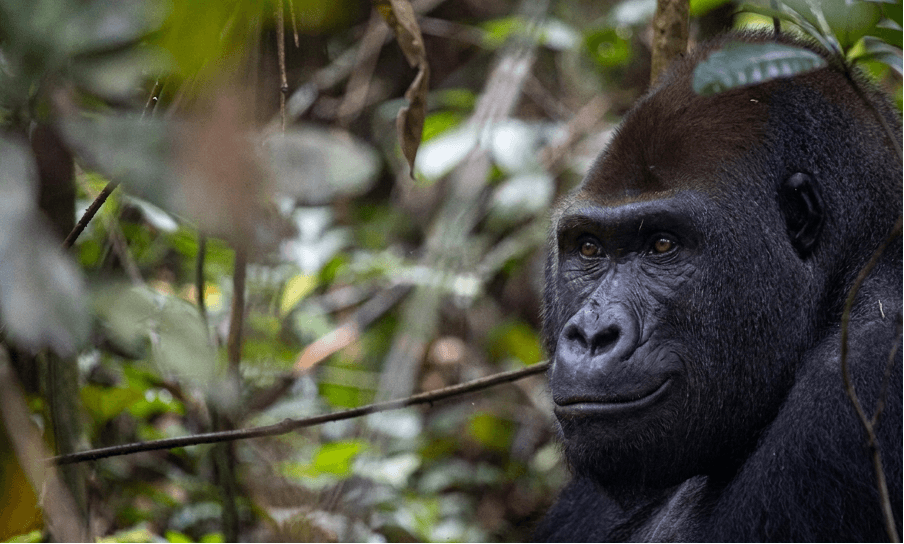
Absolutely. You can track habituated western lowland gorillas in both Moukalaba-Doudou National Park and Loango National Park. While wilder and more physically demanding than mountain gorilla trekking in East Africa, it offers an incredibly raw, exclusive experience with far fewer tourists.
Gabon operates on West Africa Time (WAT), which is UTC+1. The country does not observe daylight saving time changes.
Gabon uses the Central African CFA Franc (XAF). ATMs are highly unreliable and frequently run out of cash outside of Libreville. We strongly recommend bringing cash in Euros or US Dollars, which you can easily exchange through your guide or at a local bank.
For general pocket money, we recommend budgeting about $100 to $150 USD per day for minor expenses. A soda typically costs around $2 USD, and a decent restaurant meal ranges between $15 and $35 USD. We highly encourage tipping your local guides and drivers, as these tips make a immense difference to their families.
Most of our guests prefer to book their own international flights to Libreville (Leon M’ba International Airport) to maximize their airline miles or choose their preferred routes. However, our Kwafrika Travel team is always available to advise you on the best flight paths and connection times. Check this site.
We hope this Gabon Travel Guide helps you envision your next great adventure into the wild. When you are ready to turn this dream into a reality, the team at Kwafrika Travel is here to craft an unforgettable, seamless journey into the heart of Africa’s last Eden.