

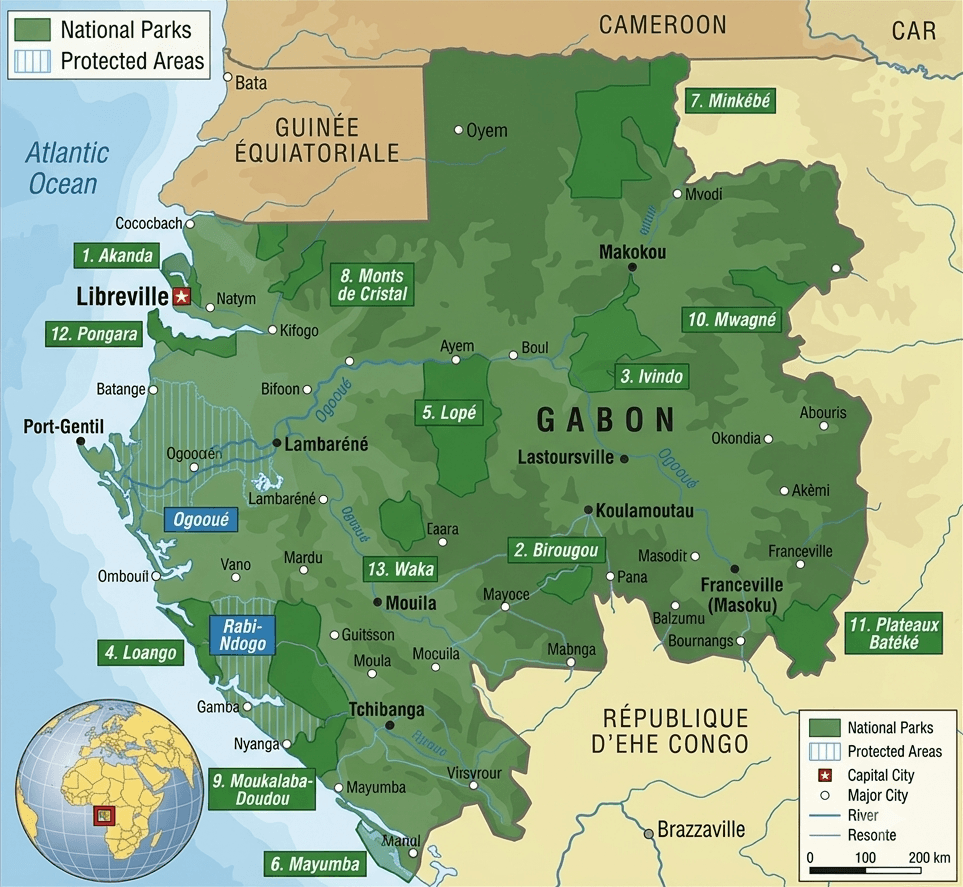
The Republic of Gabon is a premier Central African travel destination known for protecting 13 national parks and sustaining an incredible 88% rainforest coverage. Booking a Kwafrika Travel expedition ensures you experience this ecologically intact sector safely.
Specifically, our curated itineraries focus on Loango National Park, a spectacular coastal reserve where marine and terrestrial biomes physically intersect. By exploring these pristine environments alongside expert local trackers, you will discover isolated ecosystems that most travelers never reach.
Consequently, visiting Loango National in the Republic of Gabon delivers a highly exclusive wildlife experience far removed from crowded tourist trails.
Embarking on a Loango National Park safari transports you to a 1,550-square-kilometer sanctuary where the dense jungle literally meets the Atlantic Ocean. What to expect here differs wildly from traditional savannah circuits found in eastern Africa.
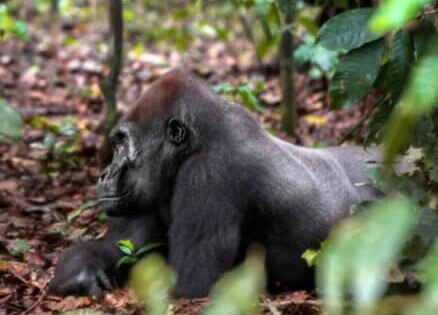
You will directly observe forest elephants grazing near the water, dwarf buffaloes trekking along the shoreline, and surfing hippopotami navigating the coastal shallows. Furthermore, this protected habitat sustains thriving populations of western lowland gorillas, red river hogs, and elusive sitatunga antelopes.
Your adventure typically begins in Libreville before taking a 35-minute flight to Port Gentil. Following arrival, a three-hour 4×4 transfer transports you deep into the untouched wilderness.
Thorough preparation remains absolutely vital for traversing the Congo Basin effectively in 2026. Venturing into these remote, 12-hour daylight equatorial zones demands proactive administrative and medical planning.
First, travelers crossing regional borders must secure up to three separate physical visas months before departure. Additionally, immigration officials strictly mandate valid yellow fever immunization certificates at every single border checkpoint.
Ultimately, trusting Kwafrika Travel’s localized expertise eliminates unexpected border delays completely. Our reliable escorts ensure your transition across remote territories stays efficient, protecting your well-being during physically demanding primate treks.
Securing a premium, off-the-beaten-path safari requires a tailored budget geared toward exclusive access. Currently, the official western lowland gorilla trekking permit costs $900 per person per trek.
Kwafrika Travel organizes these premium experiences at coastal reserves or offers Moukalaba-Doudou National Park for more budget-conscious explorers. However, an exclusive expedition in Central Africa generally requires higher investment than comparable luxury safaris in Rwanda or Uganda.
Complete tour quotes typically range from $5,000 to over $10,000 per person. These comprehensive packages include dedicated 4×4 transport, secluded lodge accommodations, daily meals, professional guiding, and your required primate tracking permits.
Yes, tracking western lowland gorillas involves physically demanding hikes through dense, humid rainforests. Treks typically last between one and four hours. Therefore, visitors need moderate cardiovascular fitness and sturdy hiking boots to navigate the muddy, unpaved terrain safely and comfortably.
This pristine coastline represents one of Earth’s rare environments where large mammals directly access the ocean. You can witness forest elephants walking on sandy beaches and hippos swimming in salt water, creating spectacular photographic opportunities impossible in landlocked African parks.
The dry season, running strictly from June to September, provides the most favorable exploration conditions. Trails remain fully navigable, humidity drops slightly, and animals constantly congregate around permanent water sources, significantly increasing your chances of spotting rare regional wildlife species.