



Deep in the heart of the world’s second-largest rainforest, Nouabalé-Ndoki National Park stands out as one of Central Africa’s most exceptional wilderness areas. It is the world’s first site recognized for its ecological integrity under the Key Biodiversity Areas standards. Here, ancient mahoganies rise above the forest canopy, while endangered forest elephants, gorillas, and a remarkable range of insects and birds thrive in one of the most intact rainforests on earth.
Nouabalé-Ndoki also forms part of the Sangha Tri-National Landscape, or TNS, a UNESCO World Natural Heritage site since 2012. This transboundary conservation area links Nouabalé-Ndoki National Park in Congo, Lobéké National Park in Cameroon, and the Dzanga-Sangha Protected Areas in the Central African Republic. Recent surveys recorded 116 mammal species, 429 bird species, and 1,122 plant species, confirming the park’s extraordinary ecological value.
For travelers looking for raw wilderness, research-led conservation, and rare wildlife encounters, Nouabalé-Ndoki National Park Safaris offer one of the most authentic jungle experiences in Africa.
1993 marked the creation of Nouabalé-Ndoki National Park, following WCS studies and recommendations. In 1994, the Mbeli Baï research site opened, allowing daily wildlife observation from a viewing platform. In 2002, Kingo became Mondika’s first habituated silverback, a major step in gorilla conservation. In 2005, the Mondika research site was added to the park and placed under WCS management. By 2007, the Fondation Trinationale de la Sangha brought together Nouabalé-Ndoki, Dzanga-Sangha, and Lobéké in a shared conservation vision.
These milestones show how science, conservation, and tourism have grown together in the park.
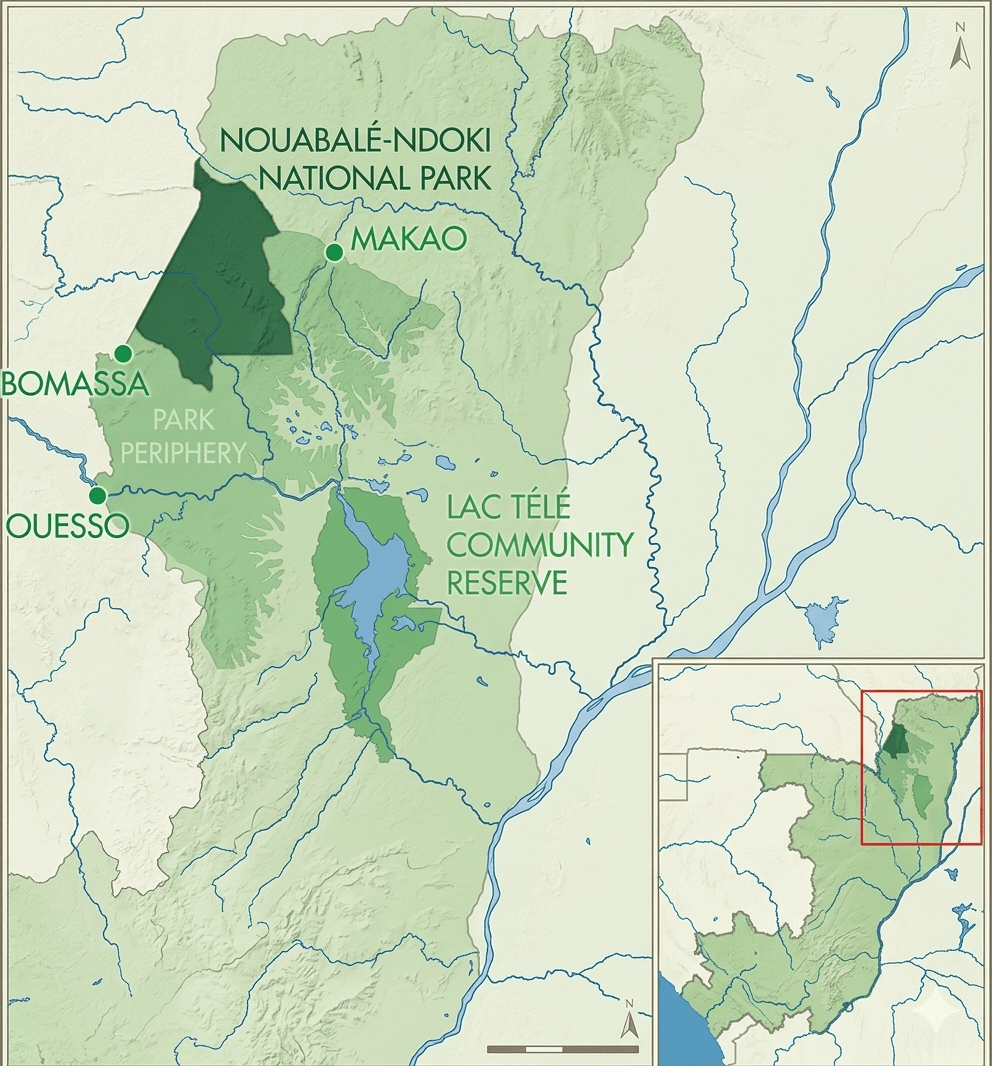
Nouabalé-Ndoki National Park is a true sanctuary for biodiversity. The Wildlife Conservation Society manages the park through long-term research and monitoring, helping protect some of the most pristine rainforest landscapes in the Congo Basin. Visitors do not just come here to see wildlife. They also come to understand conservation in action, often with WCS staff guiding the experience.
This is one of the best destinations for travelers interested in Western Lowland Gorilla Trekking, forest exploration, and meaningful eco-tourism. The park rewards patience, curiosity, and a spirit of adventure.
A Congo safari in Nouabalé-Ndoki can reveal an impressive mix of primates and mammals. The park protects Western Lowland gorillas, chimpanzees, and several monkey species, including black-and-white colobus, red colobus, moustached guenons, crowned guenons, and grey-cheeked mangabeys.
Visitors can also stop at remote riverside outposts and traditional B’Aka forest villages. These encounters offer a deeper understanding of how local communities live with the forest and contribute to its protection.
The park offers a rare sense of silence and remoteness. With limited infrastructure and only a few remote camps, the journey feels intimate and untouched. That atmosphere makes Nouabalé-Ndoki National Park Safaris especially appealing to travelers who want to disconnect from modern life and feel the forest fully.
A dugout pirogue ride through flooded swamps, followed by forest walks, gives visitors some of the best chances to observe birdlife and the subtle rhythms of the marsh. This is also an excellent setting for nature photographers and serious wildlife watchers.
The dry season, from December to February, offers easier access and smoother trekking conditions, making it the most recommended period for gorilla trekking and travel. The rainy season, from August to November, brings heavier conditions, and the park receives about 1,250 mm of rain each year. Trekking remains possible year-round, but roads and trails can become more demanding.
The park is accessed through Ouesso, which lies about 8 to 10 hours from Brazzaville. Budget travelers can use public transport for part of the route. From Ouesso, the journey continues with a 4WD vehicle and a ferry to reach Nouabalé-Ndoki National Park. It takes patience, but the journey itself is part of the adventure. The route through forest towns and remote outposts prepares you for the deep wilderness ahead.
This is exactly the kind of journey Kwafrika Travel celebrates: remote, enriching, and worth every effort.
Nouabalé-Ndoki offers simple, authentic, off-the-grid accommodation that keeps the focus on nature and experience.

Mbeli Camp sits on the edge of the Mbeli Bai clearing. Its wooden huts on stilts are basic but comfortable, and the location gives guests excellent chances to see lowland gorillas, forest elephants, buffalo, and antelope.
Mondika Camp offers a more rugged experience and serves mainly as a research base. It is the only accommodation that gives access to the habituated Mondika group of Western Lowland gorillas, making it especially valuable for travelers interested in Western Lowland Gorilla Trekking.
For many visitors, these stays become the highlight of Nouabalé-Ndoki National Park Safaris, because they combine wilderness, learning, and rare wildlife viewing in one journey.
Bomassa sits near the point where the borders of Cameroon, the Central African Republic, and Congo meet. It serves as an access point to the park in the north and often functions as a base for rangers, researchers, and eco-tourism activities. Bon-Coin, its twin village on the other side of the park base, is home to a large BaAka Indigenous community.
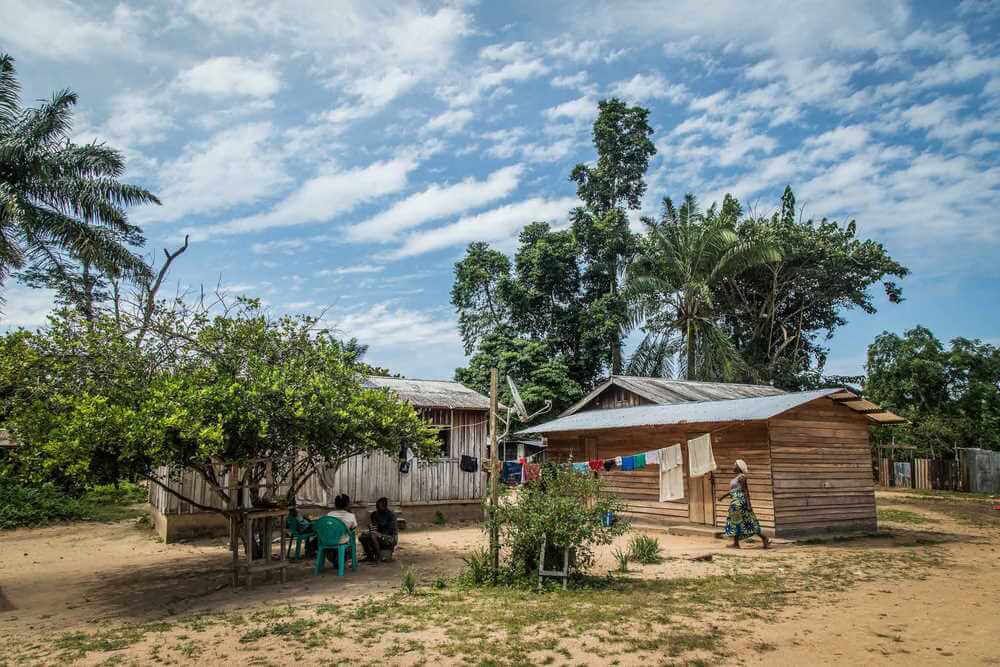
Bomassa offers a lively glimpse into village life in the Congolese rainforest. Between the small shops, churches, bars, and pétanque players, visitors get a real sense of the local rhythm. You may also catch a performance by an indigenous polyphonic singing group before walking the 800 meters from the village to the park base.
At the base, monkeys and hornbills often appear in the trees above the buildings. The park team can also explain the park’s history, scientific research, and community work. Elephants regularly visit the village and the base, especially at night, so visitors should move carefully after dark and early in the morning.
Mondika ranks among the world’s oldest Western Lowland gorilla research sites and remains one of the best places to walk alongside habituated gorilla groups. Set in one of the most intact forests of the Congo Basin, the site gives visitors a close look at gorilla behavior while supporting anti-poaching and wildlife monitoring work.
From Bomassa, the route to Mondika takes about 45 minutes by vehicle, followed by a 2.5-hour walk to the research camp. The forest feels humid, alive, and rewarding. Birds and dragonflies brighten the path, especially near the stream that runs through the camp.
Most gorilla home ranges lie about one hour’s walk from camp. Visitors may hear the deep call of a silverback or watch the playful movements of young gorillas in the Mététélé group. Because Western gorillas are Critically Endangered, guests must follow every instruction from park staff. Their guidance protects both visitors and wildlife.
Three gorilla groups have already been habituated: Kingo’s in 2000, Buka’s in 2007, and Mététélé’s in 2021. A fourth group is still being habituated. Kingo, believed to be around 45 years old, became the world’s first habituated Western Lowland gorilla. The Mondika research team also has a strong legacy of female leadership, which adds another important layer to the park’s conservation story.
Long-term gorilla monitoring at Mondika has helped researchers better understand gorilla behavior, ecology, and social structure. Habituation takes years of careful work, and it allows observers to study gorillas without disturbing their natural routines. Researchers also collect dung and other biological samples to study health, genetics, parentage, and group genealogy.
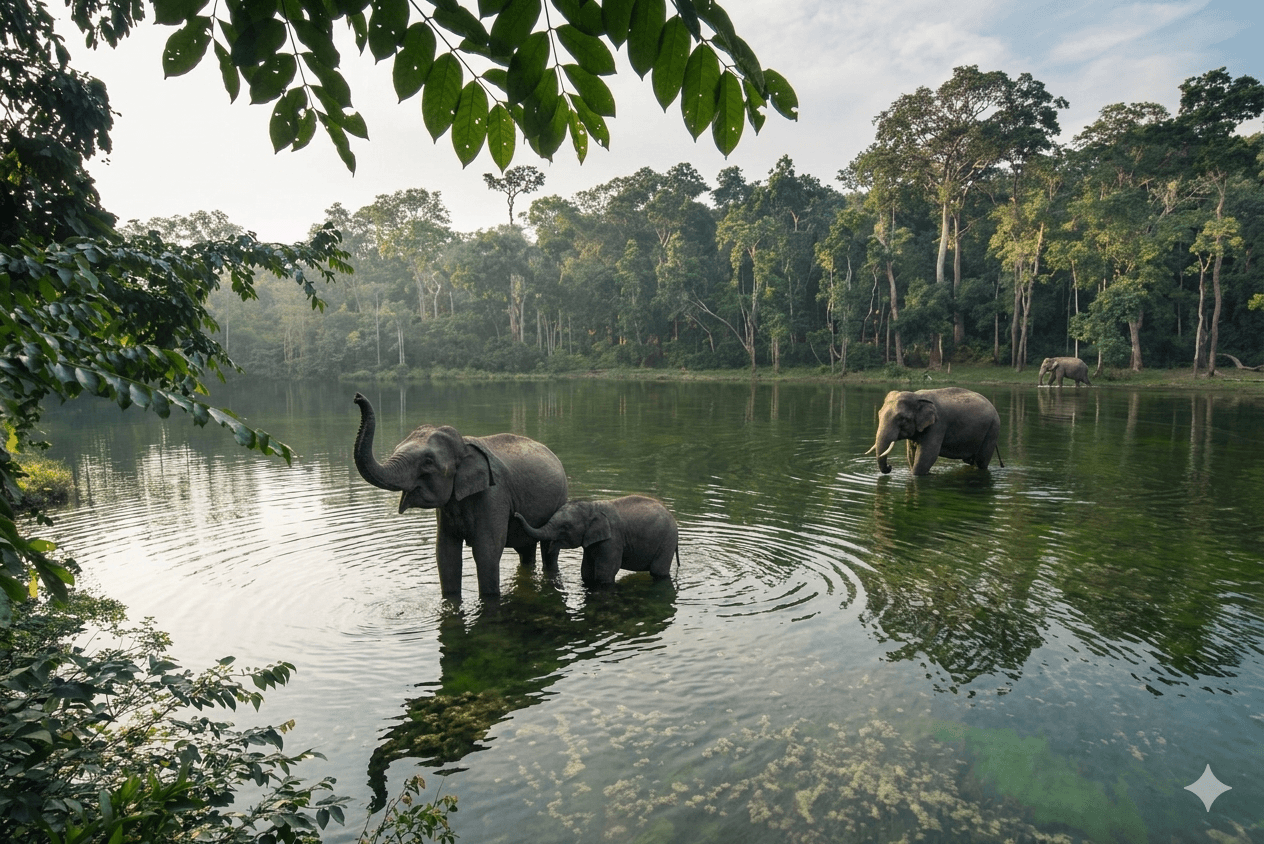
Wali Bai is a forest clearing, or bai, where wildlife gathers to feed on mineral-rich soils. In Central African forests, these clearings attract elephants, gorillas, buffalo, and birds, making them excellent places for observation and research. Wali Bai is especially important for gorilla and elephant counts.
It is one of the best places to observe forest elephants. A raised viewing platform gives visitors a safe and impressive vantage point over the clearing, where animals move through a calm and beautiful setting surrounded by dense forest.
Visit quietly so you do not disturb the wildlife. In the soft golden light, elephants often bathe, and you may also see buffalo and rare birds of prey. As evening arrives, the clearing comes alive with splashing, trumpeting, and movement. Morning mist adds another layer of beauty before the return walk to Bomassa, which takes just under an hour through scenic forest.
Visitors can spend a few hours at Wali Bai or stay longer as part of an overnight sleepout.
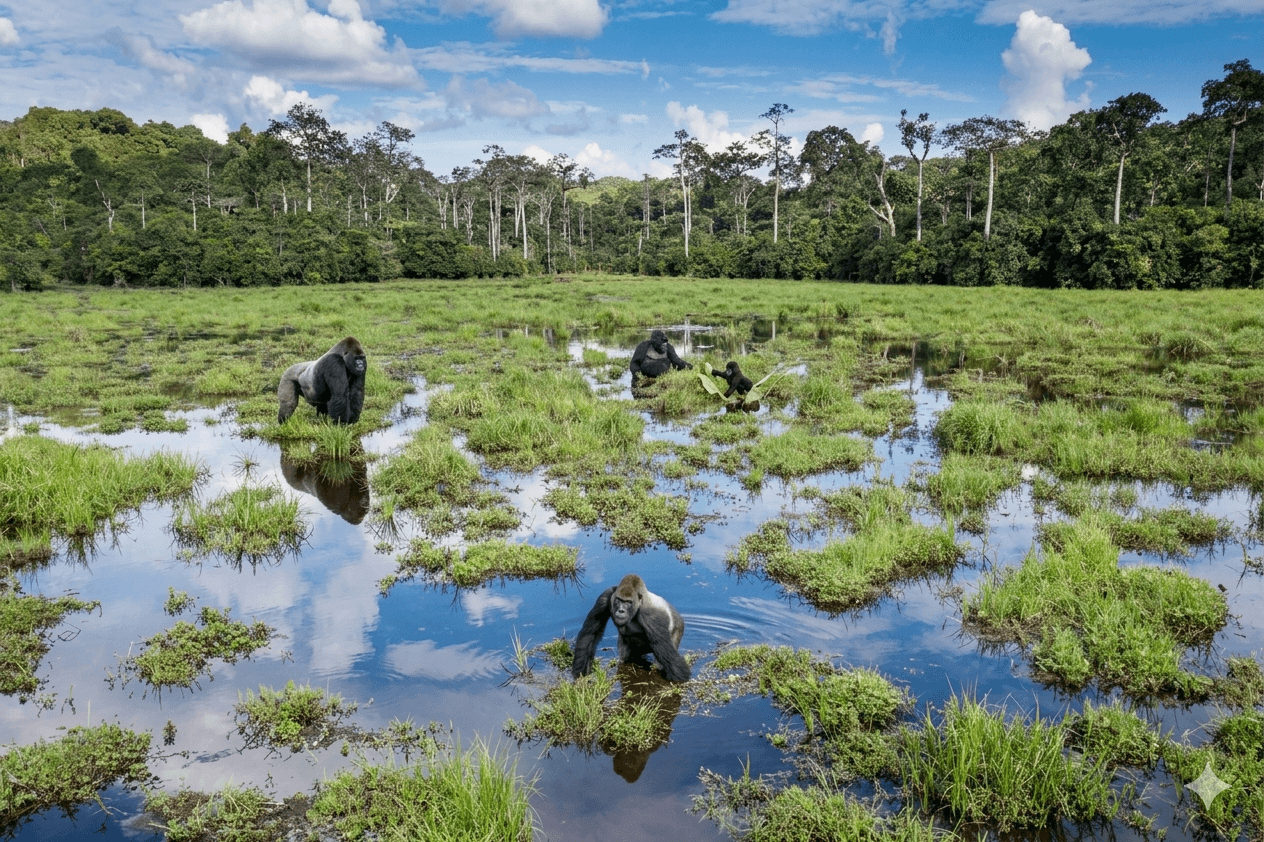
Mbeli Bai offers a unique window into the rainforest. This 12-hectare clearing gives visitors a chance to observe elephants, gorillas, sitatungas, and many other species in a wide, open setting. It is one of the park’s most important places for wildlife viewing and long-term research.
Dr. Shelley McGraw’s Mbeli Bai Gorilla Project has studied Western Lowland gorillas here for decades, making the site a cornerstone of conservation science as well as tourism.
Access begins with a 45-minute drive from Bomassa, followed by a canoe paddle along the Ndoki and Mbeli rivers. The route passes swamp forest and water lilies before a 45-minute forest walk leads to the 5-meter viewing platform. From there, visitors enjoy one of the most impressive wildlife scenes in Central Africa.
Most animals visit early in the morning or late in the day. Some may stay all day, while others may not appear at all. That unpredictability is part of the experience. Spending the night on the viewing platform offers the best chance to enjoy sunrise and the quiet drama of the bai.
Researchers identify elephants by features such as ear vein patterns, tusk shape, and tail hair. Trackers also help teams move safely around the bai to study other species. Current research focuses on leopards, golden cats, and nocturnal activity, while earlier studies improved understanding of monkey communication and social structure.
A visit to Nouabalé-Ndoki is not just a safari. It is a deep rainforest journey shaped by conservation, research, and real wilderness. Whether you are drawn by gorilla trekking, wildlife photography, birdwatching, or immersive eco-tourism, Nouabalé-Ndoki National Park Safaris deliver a rare and meaningful adventure.
For travelers seeking something raw, authentic, and unforgettable, this protected forest remains one of the most rewarding destinations in Central Africa.