


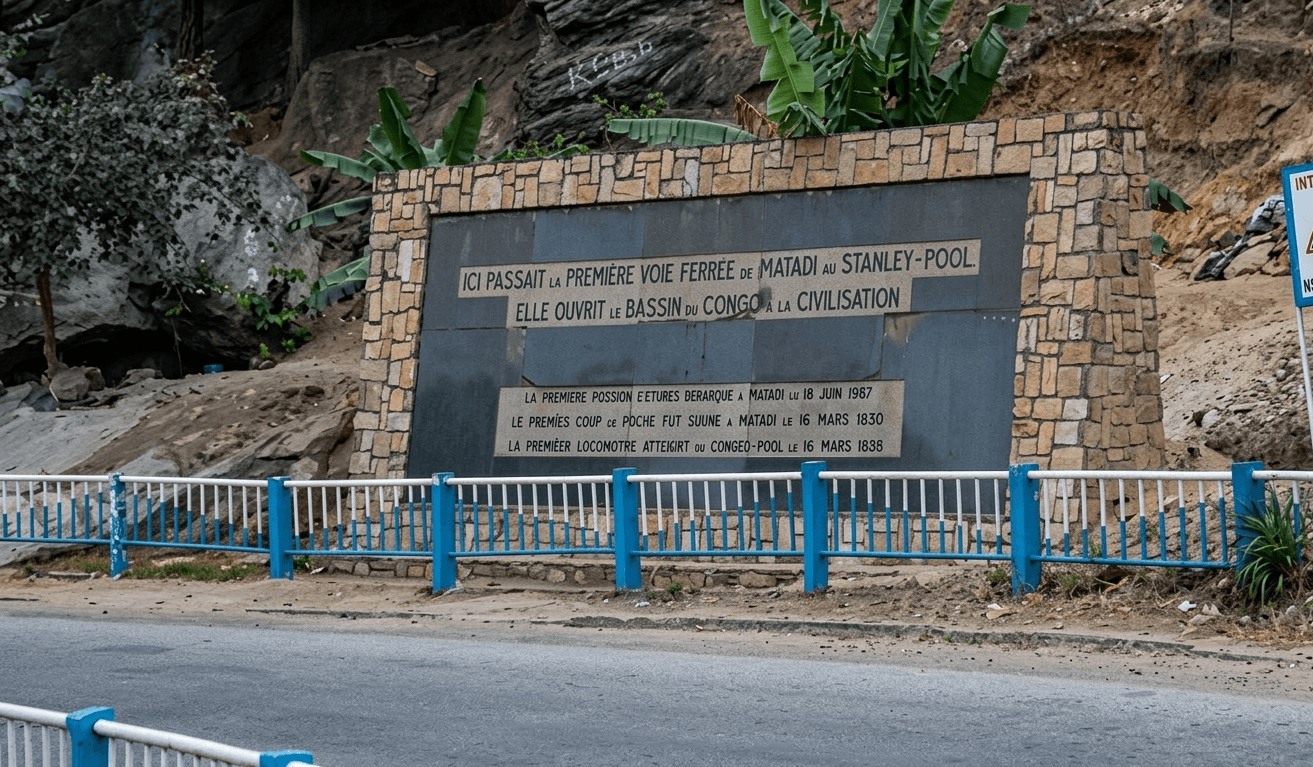
The DR Congo is a destination known for its immense natural resources and the powerful Congo River. Specifically, the nation serves as a central African logistics hub where water meets rail. Understanding the Matadi Port History is essential for any traveler exploring the “stony city” and its role as a vital anchor for regional trade in the Congo Basin.
Historical significance permeates the rocky hills of this trading station, founded in 1879. Visitors often ask which historic sites define the city’s heritage. One notable landmark is the “Rock of Diogo Cão,” where Portuguese explorers carved inscriptions into the stone in 1485. Later, British-American explorer Henry Morton Stanley established the site as a strategic base for inland exploration.
When exploring which historic sites define the city’s heritage, one cannot overlook the colonial architecture that links this port to Boma in DR Congo. These structures represent the early administrative efforts to connect the Atlantic coast to the African interior.
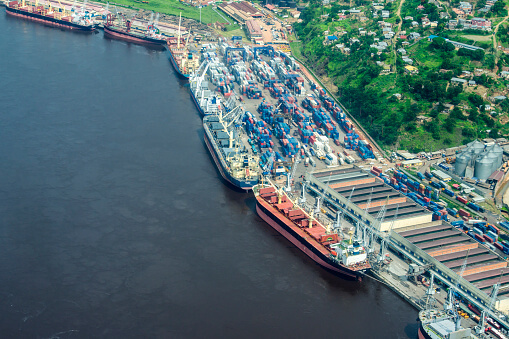
The Matadi Port History began in earnest in 1879 when traders recognized its unique geography. Situated on the left bank of the Congo River, the port sits exactly 148 kilometers from the Atlantic mouth. Consequently, its mile-long waterfront, carved directly into granite, accommodates large ocean-going vessels that cannot navigate further inland due to upriver rapids.
Strategic importance defines this urban center today. The city pulses with a unique “utilitarian” aesthetic driven by the export of timber, coffee, and minerals. Furthermore, the state fishing company, Pemarza, utilizes these docks to supply essential protein to the capital.
The journey between the capital and this port city requires careful planning. Typically, most travelers opt for a direct road transfer, which covers approximately 350 kilometers of paved surfaces via the RN1. Consequently, travel times from Kinshasa average between 7 and 9 hours depending on cargo truck congestion.
Heavy traffic often extends the duration of the trip. Therefore, Kwafrika Travel recommends scheduling departures in the early morning to minimize delays. Ultimately, many travelers include stops at Zongo Falls before arriving in Matadi to break up the long transit.
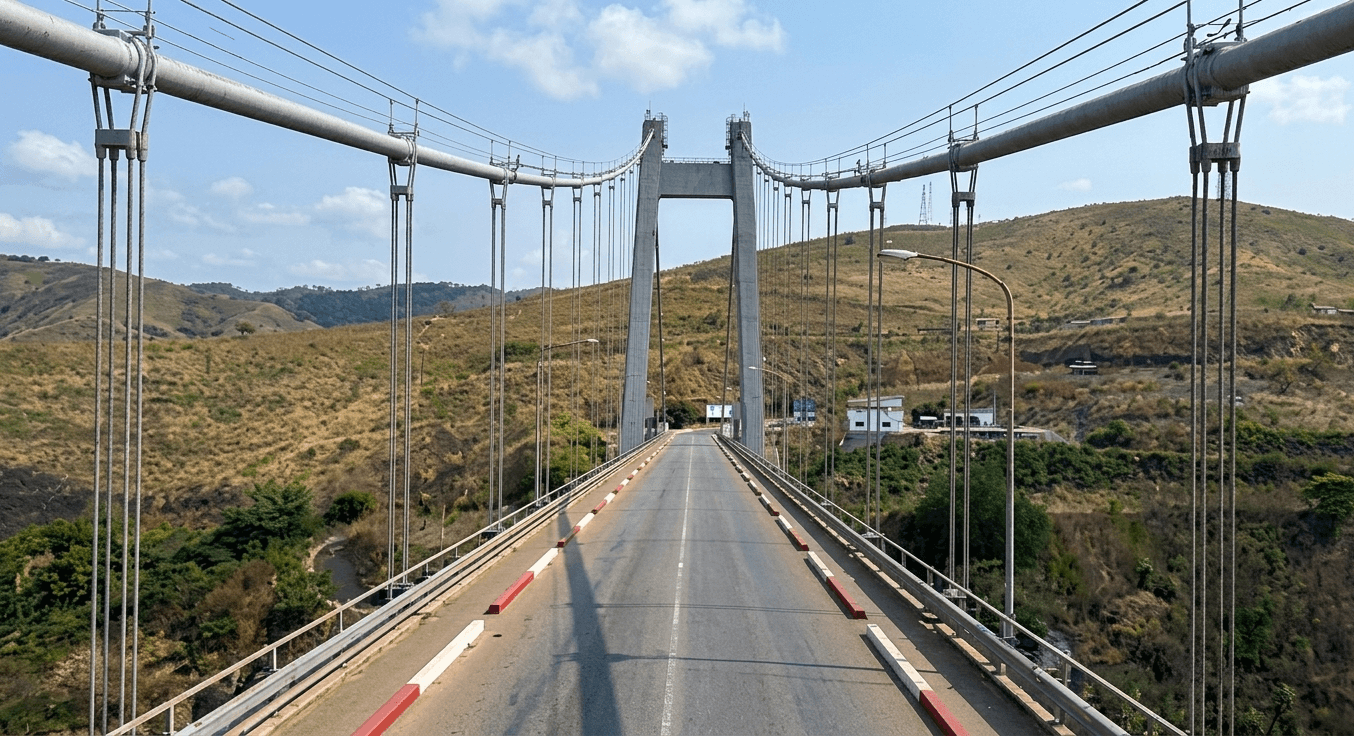
The Matadi Bridge represents a modern engineering marvel that towers over the river. Specifically, a consortium of Japanese companies completed this suspension bridge in 1983. It features a 520-meter main span and remains the only permanent crossing over the river’s main stem.
This bridge serves a vital logistics role by linking the port to Boma in DR Congo and the planned deep-sea port at Banana. Formerly known as Pont Maréchal.
Accommodation options cater primarily to business travelers and transit logistics personnel. In contrast to luxury resorts, you will find reliable mid-range hotels in the city center. Choosing a hotel near the Tshimpi Airport or the main transport hubs saves significant commuting time.
Kwafrika Travel suggests focusing on the “Centre-Ville” for the best access to restaurants. We recommend booking at least two weeks in advance. Consequently, travelers can ensure availability since steady demand from transport industry employees keeps occupancy rates high.
Taxis and motorbikes serve as the primary local transport over the hilly landscape. The Matadi Bridge sits just south of the city center, offering a panoramic view of the Matadi Port History and the swirling “Devil’s Cauldron” currents below. Travelers can reach these viewpoints in roughly 15 minutes from the waterfront.
Yes, the bridge is open to visitors, though security personnel monitor the area closely. You may walk across the pedestrian path to view the Congo River rapids. We recommend carrying official identification and a local guide for a smooth experience.
While some industrial barges move between the two cities, most travelers use the paved road for the 120-kilometer trip. The drive offers better views of the Mangrove National Park and is significantly faster than navigating the river’s complex currents.
The dry season, from June to August, offers the most stable road conditions for the drive from Kinshasa. During these months, temperatures are cooler and humidity is lower, making the steep climbs to the city’s many viewpoints much more comfortable.
This review is based on Kwafrika Travel’s active 2026 operations in the Kongo Central region and the Kinshasa-Matadi corridor.
