


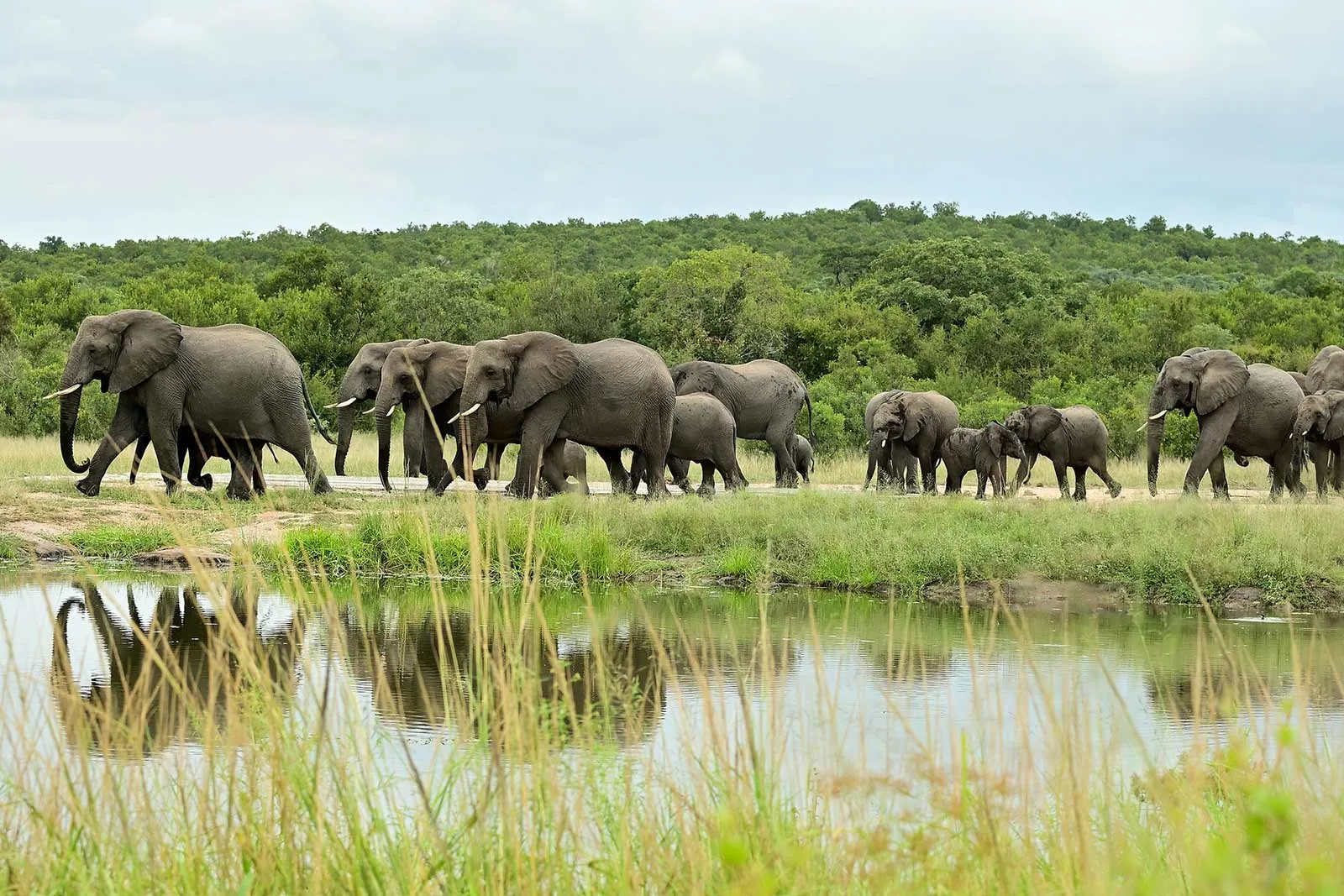
The Republic of Gabon is a premier Central African travel destination protecting 13 national parks across 88% of its landmass. Booking a 12-Day Gabon Expedition ensures travelers experience this ecologically intact sector of the Congo Basin firsthand. This 12-Day Gabon wildlife Safari focuses on tracking unique species within strictly protected reserves. Consequently, Kwafrika Travel meticulously coordinates every logistical detail for you.
Our expert guides balance deep biodiversity tracking with comprehensive coastal exploration. This route leads you straight to the 100-kilometer wild coast of Loango, where marine and terrestrial biomes collide. Exploring pristine rainforests alongside local trackers reveals the country’s most isolated ecosystems. Ultimately, this 12-Day Gabon Expedition immerses you entirely in Africa’s Last Eden.
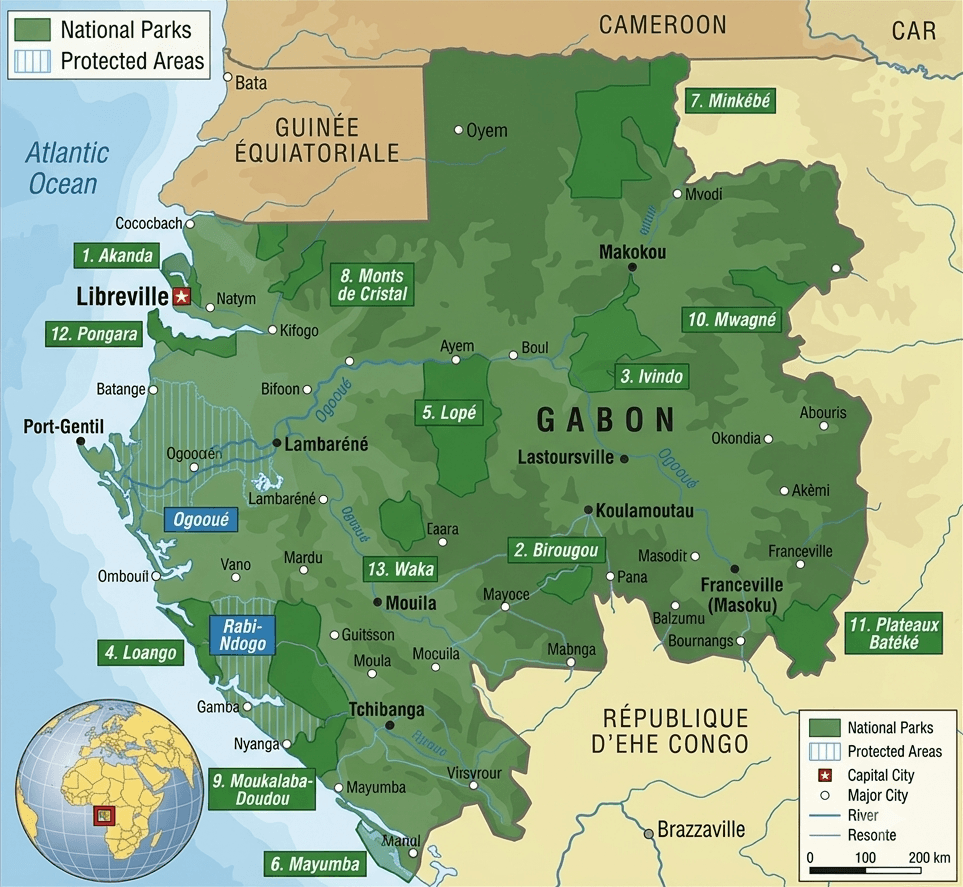
Travelers consistently ask us how the daily schedule unfolds across these remote regions. We utilize specialized 4×4 vehicles, riverboats, and regional trains to navigate the terrain efficiently. Below, you will find the exact structural progression of your upcoming journey.
| Day | Destination | Core Activities | Accommodation |
| 01 | Libreville | Airport meet and greet, comprehensive tour briefing | Residence Oceane |
| 02 | Lopé National Park | Road or train transit, initial forest-savannah immersion | Lopé Hotel |
| 03 | Lopé National Park | Safari tracking 1,300-member mandrill troops and elephants | Lopé Hotel |
| 04 | Lambaréné | Road transfer, relaxation along the 1,200-km Ogooué River | Agneghe Beach |
| 05 | Tchibanga | Scenic 4×4 southbound drive through remote landscapes | Relais Nyanga |
| 06 | Moukalaba-Doudou | Transfer to Doussala park gateway | IRET Station |
| 07 | Doussala | Western lowland gorilla tracking, chimpanzee observation | IRET Station |
| 08 | Sette Cama | Lagoon boat transfer to Loango National Park South Sector | Abietu Camp |
| 09 | Sette Cama | Observation of surfing hippos, forest elephants, and buffalo | Abietu Camp |
| 10 | Fougamou | Inland return transit via specialized 4×4 vehicles | Hotel du Rond-Point |
| 11 | Libreville | Final northbound road transfer back to the capital | Residence Oceane |
| 12 | Libreville | Coordinated airport transfer, official end of services | N/A |
Beyond exceptional wildlife, UNESCO classifies Lopé as a mixed natural and cultural heritage site. Furthermore, Petit Loango and Setté Cama contain historical 2,000-year-old village sites from pre-colonial trade networks. You will encounter surreal environments where large mammals behave unusually.
Aligning your travel dates with Gabon’s dynamic climate maximizes your overall wildlife sighting probability. Therefore, we categorize the optimal travel windows based on specific animal behaviors.
| Season & Months | Environmental Conditions | Key Wildlife Highlights |
| Dry Season (July – September) | River levels drop, interior trails solidify | Peak humpback whale-watching, optimal interior forest trekking |
| Rainy Season (November – April) | Lush vegetation, higher humidity levels | Peak beach activity for elephants, buffaloes, and red river hogs |
| Nesting Window (November – March) | Nighttime coastal activity increases | Leatherback and olive ridley sea turtle nesting patrols |

Travelers crossing regional borders must secure necessary physical e-visas months before departure. Additionally, immigration officials strictly mandate presenting valid yellow fever immunization certificates at every single border checkpoint. Without these documents, authorities will deny entry immediately.
Trusting Kwafrika Travel’s localized expertise eliminates unexpected border delays completely. Our reliable escorts ensure your transition across remote territories stays incredibly efficient. Consequently, we protect your well-being during physically demanding primate treks. Securing your 12-Day Gabon Expedition guarantees a seamless adventure from start to finish.
Yes, Gabon maintains a Level 1 safety rating for international travelers. Kwafrika Travel exclusively utilizes highly trained local guides and secures reliable transportation networks to guarantee your complete security during every rigorous excursion into the remote national parks.
Tracking gorillas in Moukalaba-Doudou requires significant physical endurance. You will actively hike through dense, highly humid rainforest terrains for several hours alongside expert trackers. We strongly recommend wearing sturdy hiking boots and maintaining an excellent cardiovascular fitness level.
You will primarily spot surfing hippos in Loango National-Park during the active rainy season from November to April. During these specific months, adult hippopotamuses frequently enter the Atlantic Ocean surf to navigate efficiently between their diverse coastal feeding grounds.
This review is based on Kwafrika Travel’s active 2026 operations in Libreville and the Loango region.
