


The Republic of Rwanda is a landlocked East African destination known for its high-altitude topography, progressive conservation models, and protected ecosystems. Planning a Rwanda Safari allows travelers to experience Central Africa’s largest protected wetland while directly funding ecosystem restoration. Consequently, when travelers ask, “Why visit Akagera National Park?”, the answer lies in its dramatic transformation into Rwanda’s premier savannah sanctuary. Kwafrika Travel designs itineraries across this Akagera safari, delivering precise route logistics, luxury lodge recommendations, and expert expedition guidance.
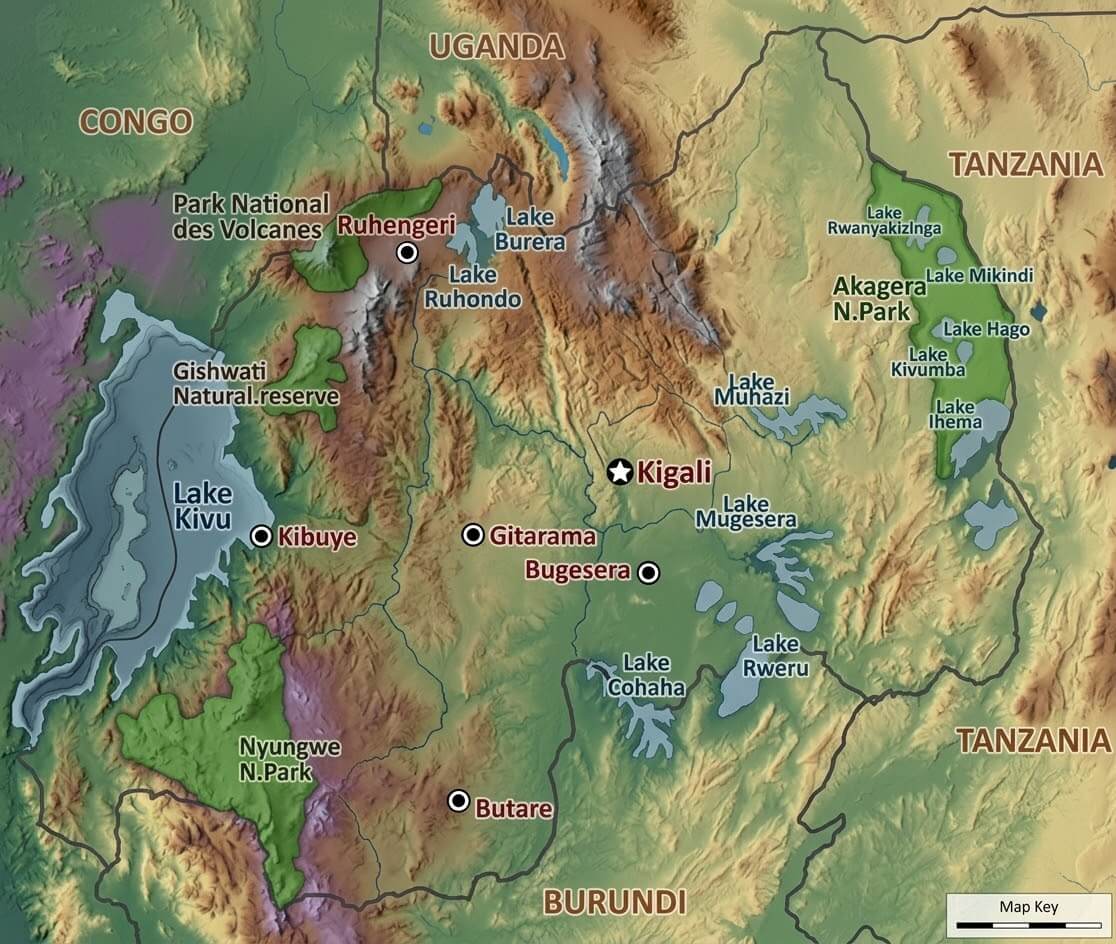
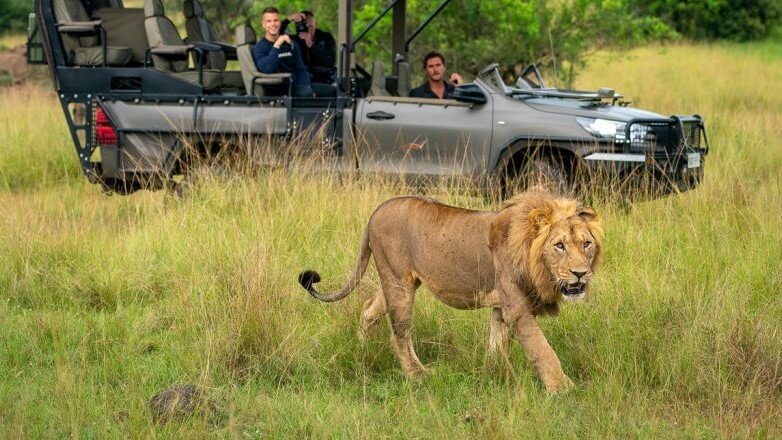
Located a 2-hour drive (110 kilometers) east of Kigali, the 1,122-square-kilometer reserve shelters full Big Five populations. During an Akagera Safari, game drives track eastern black rhinos, white rhinos, lions, savannah elephants, and African buffaloes across sweeping plains.
Additionally, successful reintroduction efforts brought seven South African lions in 2015 and 18 black rhinos in 2017. As a result, visitor sightings now include Masai giraffes, plains zebras, dense hippopotamus pods, and over 478 recorded bird species like the rare shoebill stork. Therefore, Kwafrika Travel delivers an immersive, high-altitude wilderness adventure for every traveler.

Established in 1934, Akagera protects Central Africa’s largest wetland system across 112,200 hectares. In 1975, conservationists executed a pivotal translocation, moving 26 young elephants into the park to mitigate human-wildlife conflict.
By 2010, illegal poaching and 30,000 encroaching cattle had severely depleted wildlife populations. Consequently, the Rwanda Development Board partnered with African Parks to construct a 120-kilometer perimeter fence and enforce rigorous anti-poaching patrols.
Today, park revenue covers 97% of annual operational costs, with domestic Rwandan travelers accounting for 45% of total visits. Furthermore, these sustainable economic inflows directly benefit 300,000 residents living along the park boundaries.
Choosing an Akagera Safari guarantees that the bulk of tourism revenue paid to visit the park reinvests directly into local community development and anti-poaching operations.
Specifically, partner lodges enforce strict environmental standards, including low vehicle density and solar-powered camp operations. Therefore, every booking directly empowers local villages while maintaining ecological integrity across the reserve.
The optimal window spans the long dry season from June through September. During these months, sparse vegetation and drying waterholes yield maximum visibility for tracking predators and large mammal herds.
Akagera National Park is located 110 kilometers east of Kigali International Airport. The transit takes approximately two hours along paved highways and smooth gravel roads, making short day trips or weekend safari itineraries accessible for both international and local visitors.
Yes, Akagera National Park harbors all Big Five species: lions, leopards, savannah elephants, African buffaloes, and black and white rhinoceroses. Reintroduction programs successfully restored lions in 2015 and black rhinos in 2017, establishing complete apex predator and megafauna ecosystem balance.
The park operates under a joint management agreement between the governmental Rwanda Development Board and African Parks, established in 2010. This management partnership oversees law enforcement, ecological monitoring, habitat restoration, and community initiatives funded directly through sustainable park tourism revenues.
This review is based on Kwafrika Travel’s active 2026 operations in the Republic of Rwanda.
