

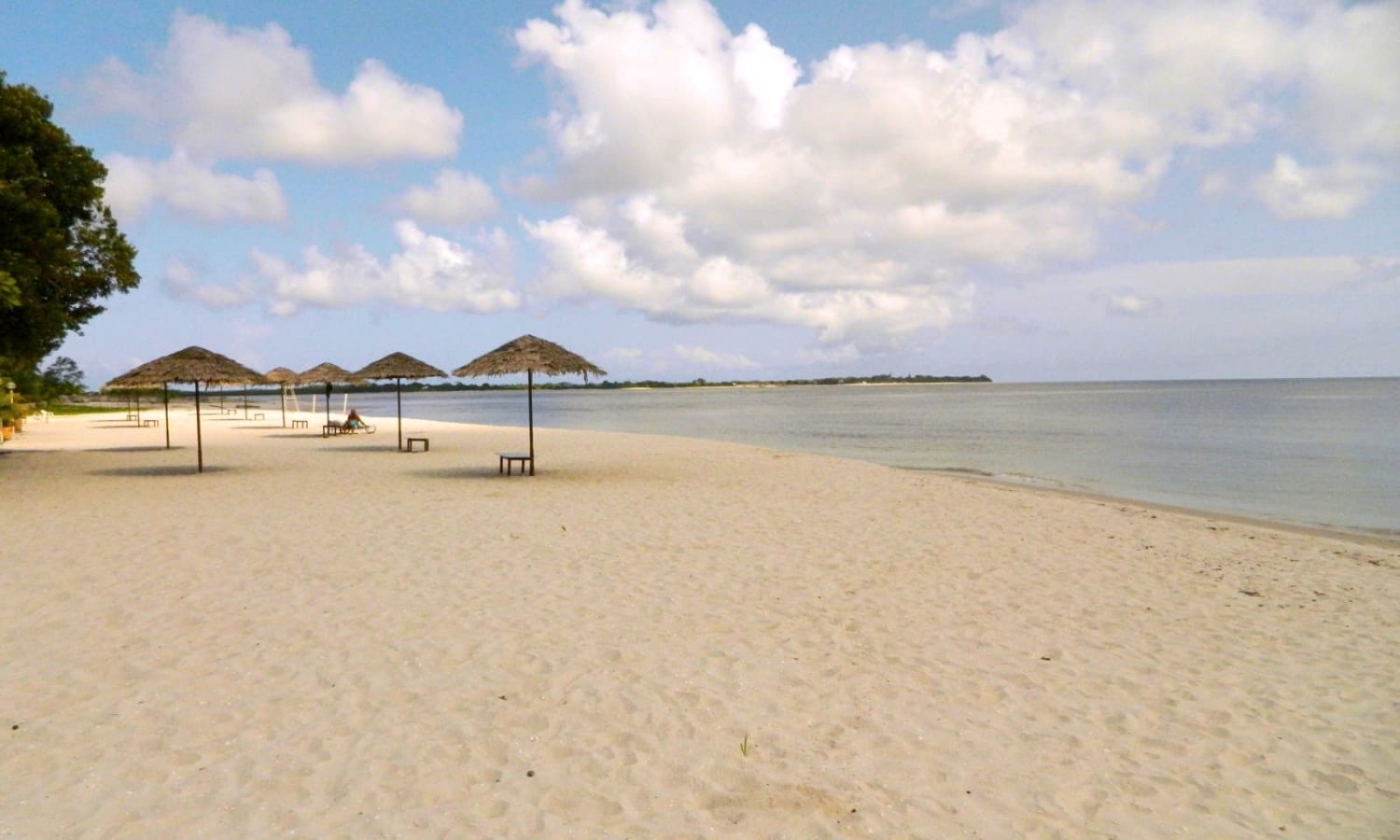
The Republic of Gabon is a premier ecotourism destination featuring a unique convergence of dense equatorial jungle and Atlantic shoreline. When planning a trip, exploring Gabon Marine Wildlife remains a top priority for eco-travelers. Witnessing the famous Loango’s Atlantic Coast Safari offers a wildlife experience completely unlike any traditional savannah circuit. Here, forest pachyderms actively forage along the sandy coast, sharing the environment with globally significant marine populations.
Port-Gentil, functioning as Gabon’s central seaport, serves as the primary coastal hub for this region. With a population of 140,000, the city thrives as the center of Gabon’s oil industry while preserving a relaxed coastal lifestyle. Therefore, travelers frequently use Port-Gentil as a strategic launch point to explore Gabon Marine Wildlife.
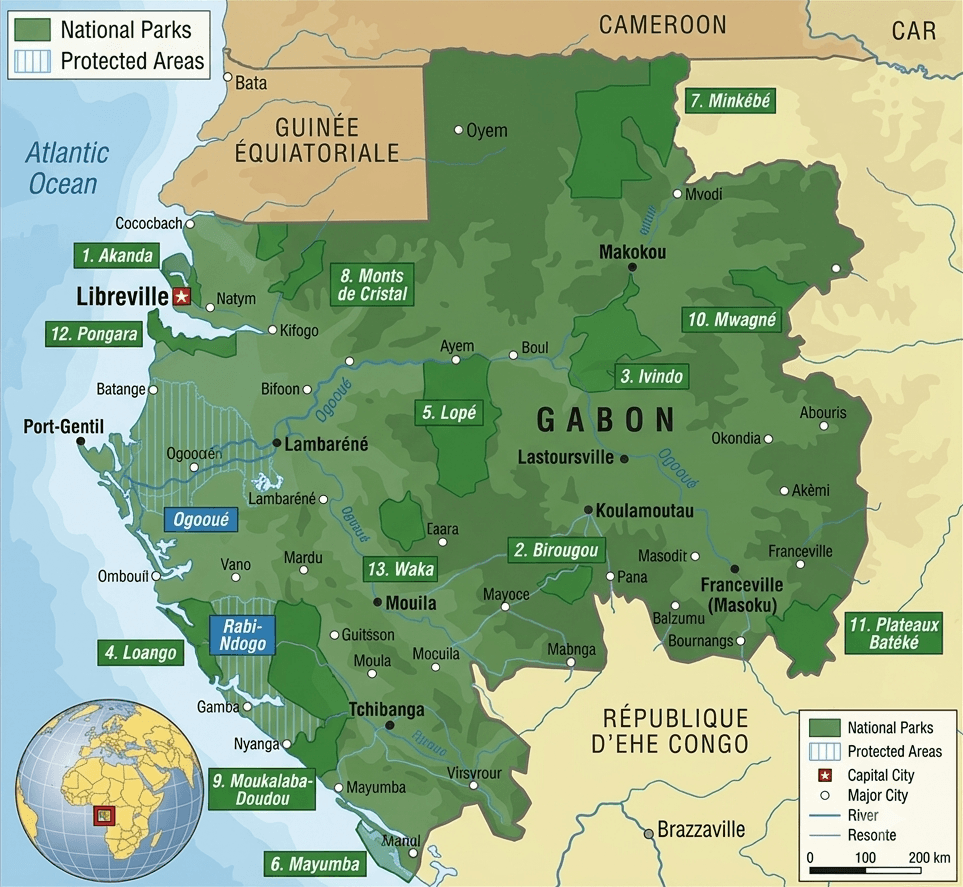
Embarking on a Loango National Park safari transports you to a 1,550-square-kilometer sanctuary. Consequently, the dense jungle abruptly meets the Atlantic Ocean. Your journey begins in Libreville with a 35-minute domestic flight to Port-Gentil.
From there, a three-hour 4×4 vehicle transfer covers a 150-kilometer overland route to the park border. Furthermore, Kwafrika Travel provides certified local escorts across this terrain to prioritize efficiency and safety.
Loango’s pristine ecosystem offers a rare combination of rainforests, beaches, savannas, and lagoons. You will spot elephants strolling along the shoreline, hippos wading through river mouths, and crocodiles basking in the sun. Ultimately, these distinct encounters solidify the region’s reputation as a top-tier eco-adventure destination for experiencing Gabon Marine Wildlife.
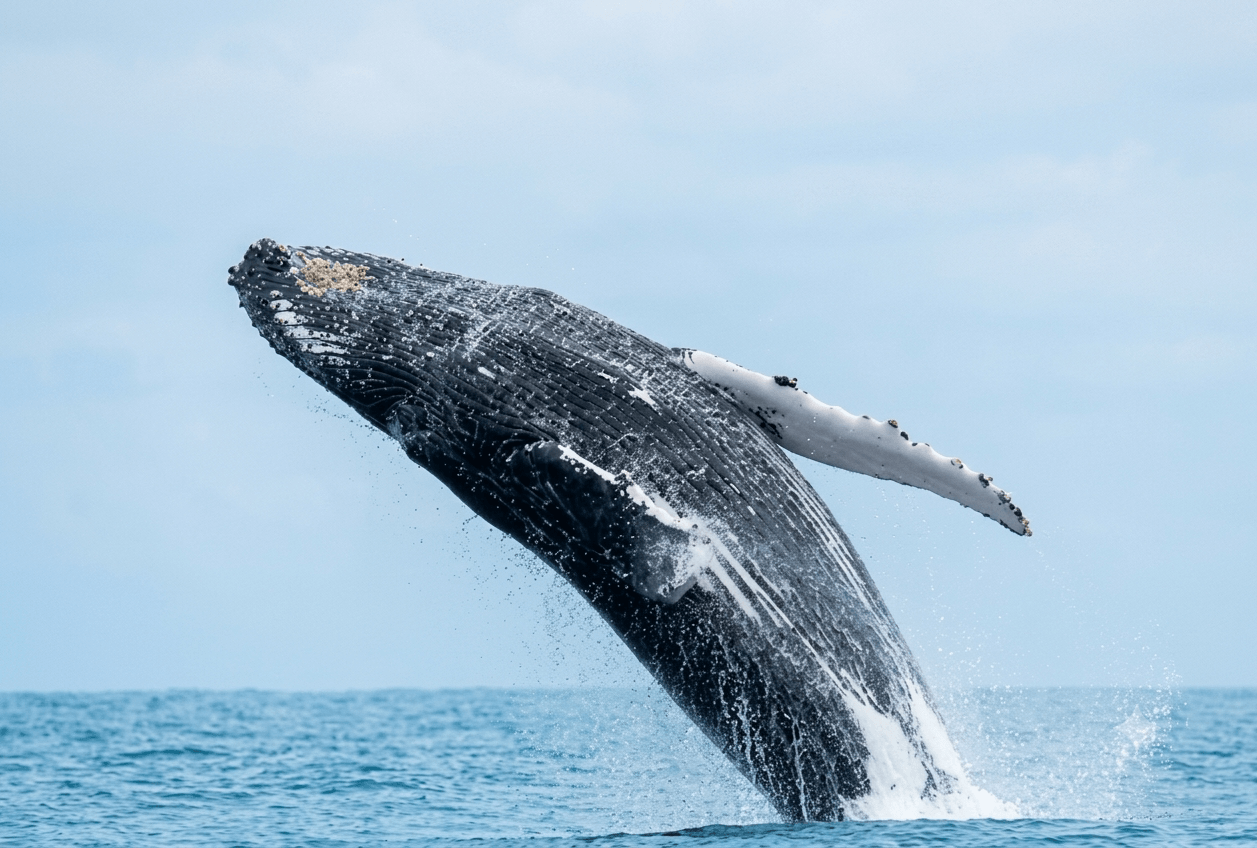
Many travelers specifically ask, “What is the best seasons to see humpback whales in Gabon?” The definitive season runs from mid-July to mid-September, corresponding with the long dry season. Activity officially peaks in August, as these mammals complete an epic migration from Antarctica to give birth in warm equatorial waters.
During this window, visitors take small-to-medium sport fishing boats operated by certified Kwafrika Travel guides. You can expect to see dramatic breaches, pectoral fin slapping, and newborn calves learning to swim. Knowing what is the best seasons to see humpback whales ensures you experience peak numbers directly from Libreville, Port-Gentil, or Loango lodges.
Whales naturally congregate along the continental shelf just offshore. Deep-water mating grounds sit directly accessible from two primary coastal launch points:
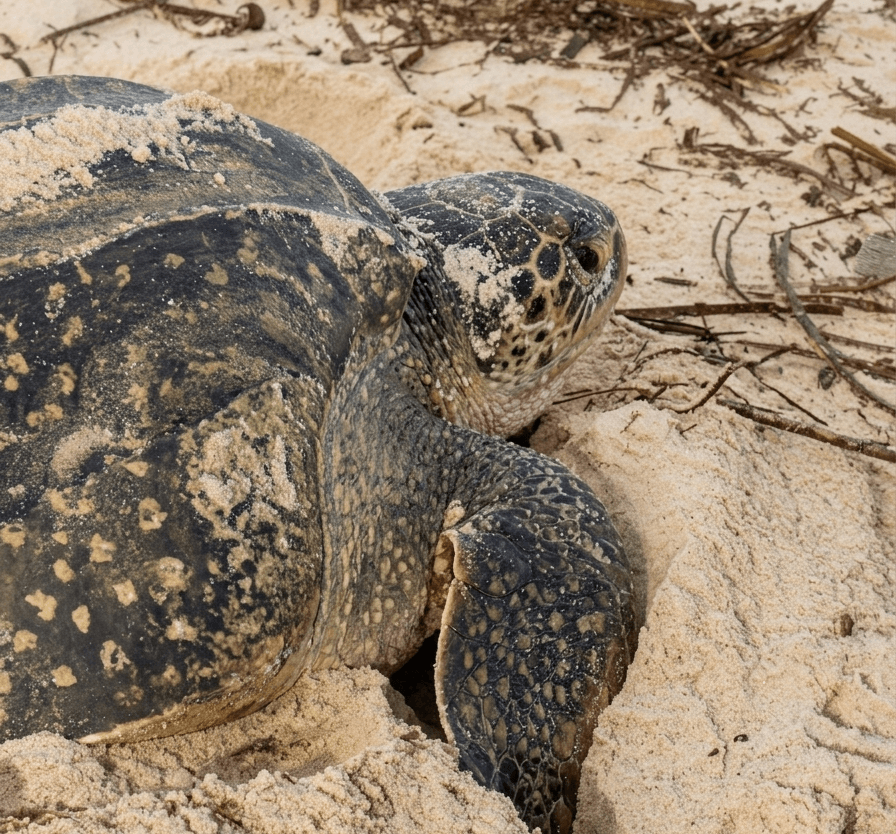
While the highest turtle densities sit further south, multiple vital nesting grounds line this specific northern route. Specifically, leatherback turtles nest extensively between November and March.
Gabon currently hosts the world’s largest nesting population of leatherback turtles. During our nightly patrols, you can intimately witness 400-kilogram females laying clutches of eggs directly on the sand.
Although marine turtles occur along Gabon’s entire Atlantic coastline, years of surveys conducted by the Wildlife Conservation Society (WCS) and its partners have identified several priority conservation areas. Gabon is home to the world’s largest nesting population of leatherback turtles, making it one of the most significant destinations for marine turtle conservation globally. The country also supports a regionally important nesting population of olive ridley turtles. Among Gabon’s most important nesting sites are Mayumba National Park, located in the south near the border with the Republic of the Congo, which has the highest density of leatherback turtle nesting in Africa, and Pongara National Park, situated near the capital, Libreville, where both leatherback and olive ridley turtles regularly nest.
You start with a 35-minute flight from Libreville to Port-Gentil. Afterward, our guides drive you on a 150-kilometer overland 4×4 route to the park. Certified Kwafrika Travel escorts manage all logistics to ensure maximum security and efficiency.
Yes, we strictly follow national marine conservation policies. Our sport fishing boats maintain legal minimum approach distances from the animals. Additionally, guides limit engine noise to protect the whales and provide a safe, respectful viewing experience.
Loango offers a rare coastal jungle ecosystem. Visitors frequently spot forest elephants foraging directly on the pristine beaches, hippos swimming gracefully in the Atlantic Ocean, and western lowland gorillas moving through the dense foliage immediately behind the sandy shoreline.
This review is based on Kwafrika Travel’s active 2026 operations in Libreville and the Loango region.
